
Electric underfloor heating: what exactly is it and why do people choose it?
In recent years electric underfloor heating has been one of the most widely discussed topics in property heating in Slovakia. Interest in it is growing not only for new builds but, increasingly, for renovations of flats and family houses too. The reason is a combination of comfort, straightforward installation in some cases and a relatively favourable price for the materials themselves. At the same time, many questions arise – particularly about running costs, suitability for different types of room and whether an electric underfloor heating system pays off at all compared with the water-based alternative.
This article gives you a comprehensive overview: from the technical basics, through real prices for materials and installation and running costs at current 2026 electricity prices, to specific real-life scenarios and answers to the most frequently asked questions. If you are considering electric underfloor heating – whether for a bathroom, a living room or a whole flat – you will find here all the information you need to make an informed decision.
How does electric underfloor heating work?
The principle of electric underfloor heating is fairly simple: an electric current flows through a resistance cable or mat laid beneath the surface layer of the floor and generates heat. This heat spreads by conduction through the floor finish into the room. Unlike water-based underfloor heating, there is no need for a boiler room, pumps or a manifold, which makes installation much simpler.
Electric underfloor heating is supplied in several basic forms:
- Heating mats – thin mats with a pre-fitted resistance cable at fixed spacing; particularly suitable for regular areas (bathrooms, kitchens), they are laid directly in thin-bed adhesive under tiles.
- Loose heating cables – a more flexible version, where the cable is laid by hand at the required spacing; suitable for irregularly shaped rooms.
- Self-regulating cables – a more advanced technology that automatically reduces power input at higher temperatures; used mainly in specific applications (e.g. frost protection for pipes, ramps).
- Infrared underfloor heating films – thin films that emit infrared radiation; popular under laminate and vinyl floors (known as dry installation).
Each of these types has slightly different installation rules, different insulation requirements and different operating characteristics. In practice, the most common combination is heating mats under ceramic tiles in bathrooms and living rooms.
Thermal insulation: the foundation that gets forgotten
One of the most common mistakes when installing electric underfloor heating is underestimating the thermal insulation. Without adequate insulation, a large part of the heat produced goes downwards – into the load-bearing structure, the neighbouring flat or straight into the ground – instead of heating the room. The result is higher running costs and less comfort. Thermal insulation is therefore just as important as the heating cable itself.
For electric underfloor heating there are special system insulation boards with a profiled surface or grooves that guide the cables at the correct spacing. These boards provide thermal insulation and mechanical fixing of the cables in a single step.

System insulation board UHP55 (STIROTERMAL BASIC) – specialised insulation with a profiled surface for routing heating cables
One example of such a solution is the System insulation board UHP55 (STIROTERMAL BASIC) – a solid choice for wet installation of electric underfloor heating, where the cable is embedded in anhydrite screed or cement-based adhesive. The board has a profiled upper surface that holds the cable in the required position and stops it moving while it is being embedded.
For what is known as dry underfloor heating – where no wet layer is created and the heating mat is laid directly under a floating floor (laminate, vinyl) – a more suitable solution is Polystyrene for dry underfloor heating UHPD (STIROTERMAL DRY). This type of insulation is optimised for minimum thickness and high compressive strength, because it has to bear the load of the floor without any embedding layer.

STIROTERMAL DRY (UHPD) – insulation for dry installation of heating films under a floating floor with no wet trades
An overview of system insulation boards and when to use which
There are several types of system insulation board on the market, differing in thickness, profile and suitability for a particular type of installation. Here is a brief overview from our range to help you find your way around:
STIROTERMAL DUO 11 (UHP51) – for minimum build-up height
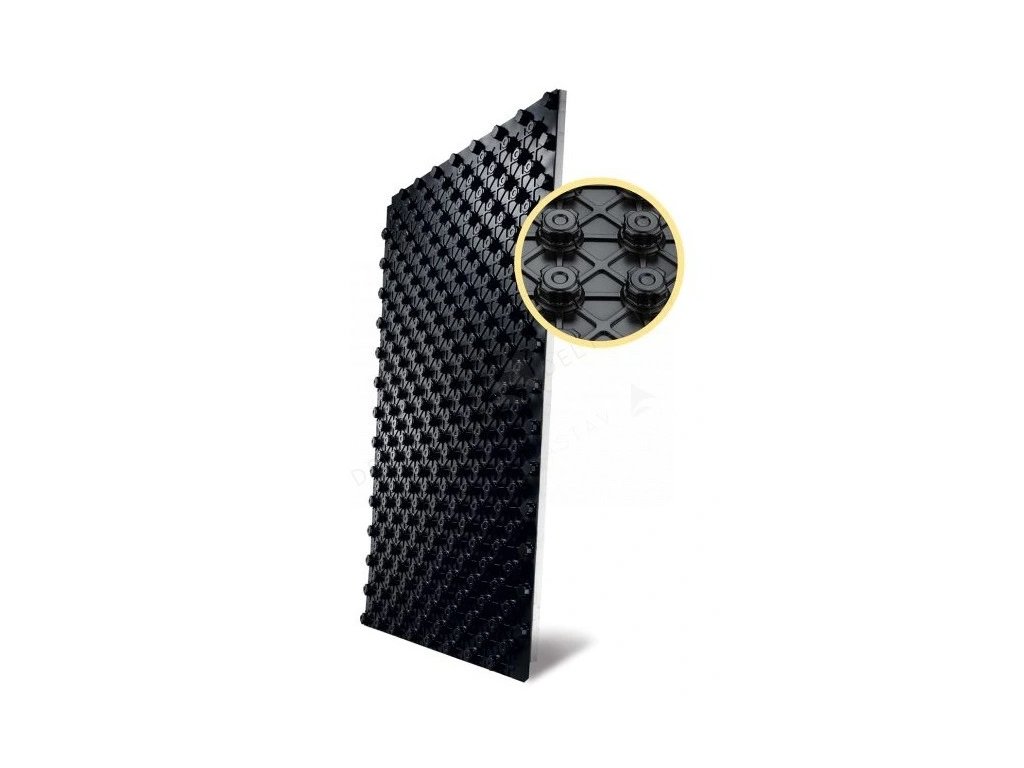
STIROTERMAL DUO 11 (UHP51) – a thin system board ideal for renovations where every centimetre of floor height counts
The System insulation board UHP51 (STIROTERMAL DUO 11) is particularly suitable for renovations of flats and spaces where the floor level cannot be raised significantly. Thanks to its minimal thickness, it allows the heating cable to be installed with the smallest possible increase in floor height. It is suitable for installations where the cable is embedded in thin-bed adhesive directly under ceramic tiles.
STIROTERMAL DUO 30 (UHP52) – for greater insulation with a thicker layer
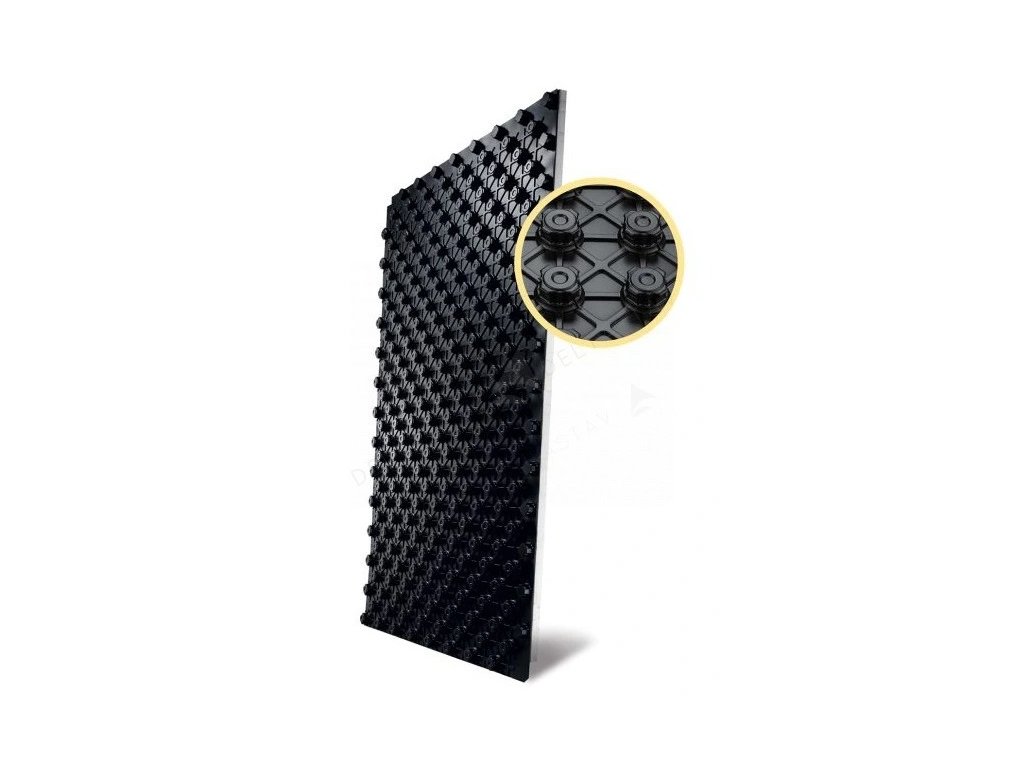
STIROTERMAL DUO 30 (UHP52) – a more robust system board with thicker insulation for better thermal resistance
The System insulation board UHP52 (STIROTERMAL DUO 30) is a more robust version with thicker insulation, which means less heat flowing downwards and a more efficient heating system. It is recommended for new builds and for spaces above unheated rooms (garages, storerooms), where there would otherwise be significant heat loss without adequate insulation. The combination of a profiled surface and thicker insulation makes this board a universal solution for most wet installations.
To complete the picture of insulation solutions, it is also worth knowing the Hardened insulation film UHP50 (STIROTERMAL SOLO) – a thin hardened film used as a complement to system boards or on its own in special applications – and the System insulation board STIROTERMAL DUO 20 – a middle option between DUO 11 and DUO 30, suitable for standard new builds with a moderate floor thickness.
The cost of electric underfloor heating: materials and installation
One of the most frequently asked questions is: How much does electric underfloor heating cost? The answer depends on several factors – the size of the area, the system chosen, the thickness of the insulation, the type of floor finish and labour rates in the region. Let us go through the individual items.
Material costs
Guide prices (2026, including VAT, for typical installations in Slovakia):
| Item | Unit | Guide price |
|---|---|---|
| Heating mat 150 W/m² | 1 m² | 20 – 45 € |
| Loose heating cable | linear metre | 3 – 8 € |
| Infrared underfloor heating film | 1 m² | 15 – 35 € |
| System insulation board (e.g. DUO 11/DUO 20/DUO 30) | 1 m² | 8 – 18 € |
| Thermostat (basic) | pc | 30 – 80 € |
| Thermostat (programmable/WiFi) | pc | 80 – 220 € |
| Tiles/laminate (floor finish) | 1 m² | 15 – 80 € |
Installation costs (labour)
As a guide, labour rates in Slovakia are:
- Electrician (connecting the thermostat and power supply): €80–150/h, in total €150–350 for a typical installation in one room
- Floor layer / tiler (preparing the floor, laying mats, embedding, tiling): €12–25/m² including materials for the work
Example: a 6 m² bathroom
To give a concrete idea: installing electric underfloor heating in an ordinary bathroom of 6 m² (actual heated area excluding the WC, bath and washbasin – say 4 m²) might look like this:
- Heating mat 4 m² × €30: €120
- System insulation board 4 m² × €12: €48
- Thermostat with floor sensor: €60
- Electrician's labour: €200
- Tiler's labour (adhesive + embedding + tiles): €350
- Total: ~€780
This is a rough estimate; in practice the sum may be lower (if you can do part of the work yourself or use cheaper materials) or considerably higher (premium thermostats, exclusive tiles, a complicated room shape).
Running costs: how much does electric underfloor heating cost per year?
This is the key question that decides whether electric underfloor heating pays off or not. And here we have to be honest: in 2026 electricity in Slovakia is still more expensive than gas or wood pellets per unit of heat. So it matters a great deal what you use underfloor heating for.
The price of electricity in 2026
After the turbulent years of 2022–2023, when wholesale electricity prices soared, the market has partly stabilised. At present (2026) Slovak households pay roughly €0.19–0.25/kWh for electricity including all charges and taxes, depending on the tariff, the distribution area and the capacity drawn. For the calculations below we shall work with an average figure of €0.22/kWh.
Calculating running costs – specific examples
6 m² bathroom, electric underfloor heating as supplementary (comfort) heating:
Power input of the mat at 150 W/m² over an area of 4 m² = 600 W = 0.6 kW. If it runs in the bathroom for an average of 2 hours a day over the 7 months of the heating season (210 days):
0.6 kW × 2 h × 210 days = 252 kWh/year
252 × 0.22 = ~€55 a year
That is a perfectly acceptable sum for the comfort of a warm bathroom floor.
25 m² living room, electric underfloor heating as primary heating (new build, well insulated):
Heat loss of a well-insulated 25 m² room ≈ 1,500 W. Power input of the underfloor heating at 100 W/m² (a typical output for supplementary/comfort heating) × 25 m² = 2,500 W, actual thermostat running time ~40 % of the heating season.
2.5 kW × 0.40 × 12 h/day × 210 days ≈ 2,520 kWh/year
2,520 × 0.22 = ~€554 a year for one room
For primary heating of a whole house (e.g. 5–6 rooms) that amounts to somewhere in the range of €1,800–3,500 a year. That is considerably more than with gas or pellets.
When is electric underfloor heating economical?
The situation changes markedly if you have:
- Photovoltaic panels – surplus solar electricity in the summer months can pre-heat the floor, or rather its storage layer, at zero variable cost. The combination of PV and an electric underfloor heating system is becoming increasingly popular in 2026.
- A favourable night-time tariff (ripple control, tariff D7) – electric underfloor heating with heat storage (a thick concrete slab acting as a heat store) can use cheaper night-time electricity and release the heat during the day. This method requires the thickness of the storage layer to be designed correctly, and an advanced thermostat.
- A heat pump – the combination of an air-to-water or ground-source heat pump with a water-based underfloor system is the most efficient system of all. In this case, however, it is not electric underfloor heating in the classic sense of the term.
Electric vs. water-based underfloor heating: a comparison
For primary heating of a whole house, water-based underfloor heating has considerably lower running costs (especially in combination with a condensing boiler or a heat pump), but it requires a larger initial investment and a more complex installation. Electric underfloor heating is cheaper to install, quicker to fit and ideal for smaller areas or supplementary use. As the primary heat source for a whole house it is financially unattractive in most cases – unless you have PV panels or another form of cheap electricity.
For whom and when does electric underfloor heating really pay off?
After reading the figures above, it might seem that electric underfloor heating never pays off. That would be the wrong conclusion, though. There are several scenarios in which this solution is not only sensible but actually optimal:
1. Bathroom or WC – comfort for your feet
This is the killer application of electric underfloor heating. A bathroom mat under tiles generally runs only in the morning and evening for a few tens of minutes, consumption is minimal (€50–100 a year), yet the comfort of stepping onto a warm floor in the morning is priceless. The investment in materials and installation is repaid in the satisfaction of those who use it, not in energy savings. This is clearly the most widespread and most recommended use.
2. Renovating a flat without a communal heating system
In older blocks of flats where it is not possible to alter the central heating (or where switching to individual heating is complicated), electric underfloor heating combined with other electric heat sources (direct-acting panel heaters, infrared panels) is a practical solution for heating the whole flat. This is especially true if the flat is well insulated (insulated façade, new windows).
3. Cabins, garden houses, outbuildings
For holiday properties that are used irregularly, where a boiler with pipework would be oversized and expensive to install, electric underfloor heating is ideal. Simple control of the thermostat via WiFi (now a common feature of inexpensive thermostats) lets you pre-heat the cabin before you arrive for the weekend.
4. Houses with photovoltaic panels
The owner of a family house with a PV system and battery storage can use surplus electricity in the summer months to pre-heat the storage layer of the floor (a thick concrete slab) and so genuinely reduce the variable cost of heating. In the winter months the PV system will not generate enough, but the overall annual balance is better.
5. Heating a particular room with special requirements
A child's bedroom, a home office, a studio – rooms where you need to control the temperature quickly and independently of the central system. An electric mat with a WiFi thermostat allows schedules to be set precisely and responds quickly.
Installation step by step: how is electric underfloor heating fitted?
Installing electric underfloor heating is not rocket science, but it does call for precision and a few rules to be followed. Here is a simplified procedure for wet installation (a heating mat under ceramic tiles):
- Preparing the substrate – The load-bearing surface must be clean, level and free of dust and grease. If the substrate is uneven, level it first with self-levelling compound.
- Installing the system insulation board – Glue down or lay the insulation (e.g. STIROTERMAL BASIC, DUO 11 or DUO 30, depending on the available height and requirements). Cover the joints in the insulation with tape to keep mortar out.
- Laying out the heating mat – The mat is rolled out in strips, turning back and forth, according to the planned coverage of the area. The cable must not cross itself or be too close to itself (min. 50 mm spacing). Avoid areas under furniture and sanitary ware (bath, WC).
- Installing the floor temperature sensor – The sensor is placed in a protective conduit inserted between the cable loops, roughly in the middle of the area. The conduit must allow the sensor to be replaced without breaking up the floor.
- Checking the electrical resistance – Before embedding, measure the electrical resistance of the mat with an ohmmeter and check that it matches the manufacturer's data (max. deviation ±10 %). This step is crucial – it reveals any damage before the mat is covered.
- Embedding in thin-bed adhesive – The mat is covered with flexible tile adhesive (at least 10 mm above the top edge of the cable). The adhesive must not contain coarse aggregate that could damage the cable insulation.
- Waiting for it to set – At least 24–48 hours before tiling, 28 days before switching on the heating.
- Laying the tiles – The standard procedure; flexible adhesive is also suitable for heated floors.
- Connecting the thermostat – Carried out by an electrician; the thermostat must be rated for the installed output, or switched via a relay for outputs above 3.5 kW.
- Gradual commissioning – The first start-up should be at a low temperature (20–22 °C), and the temperature is raised gradually over 1–2 weeks.
The thermostat: the brain of the whole system
The thermostat is the key component that determines both comfort and running costs. There are now several categories:
- Manual thermostats – simple and cheap (€20–50); you set the temperature and that is it. Suitable for rooms that are occupied regularly, or as a backup.
- Programmable thermostats – allow you to set weekly programmes (e.g. 22 °C in the morning, 18 °C during the day, 22 °C in the evening, 16 °C at night). They save 20–30 % of energy compared with a constant set temperature. Price €60–120.
- WiFi / smart thermostats – control via smartphone, integration with voice assistants (Alexa, Google Home), geofencing (automatic start when you arrive home). Price €80–220. Ideal for cabins and holiday properties.
- Adaptive thermostats – learn your habits and optimise the heating automatically. The premium category.
Experts recommend investing in a thermostat with both a floor temperature sensor and a room air sensor. The floor sensor protects the floor from overheating (important with laminate floors – max. 27–28 °C) and also ensures an even surface temperature.
Legislation and standards: what you need to know
Electric underfloor heating is subject to several regulations and standards that it is important to know:
- STN 33 2000-7-753 – the Slovak standard for electric heating systems. It sets the minimum requirements for installation, protection, earthing and sizing.
- The electrical installation must be carried out by a person with an electrical qualification (Section 22 of Decree No. 508/2009 Coll. or its successor) – the thermostat and supply cable must be connected by an electrician holding the appropriate authorisation. In the event of an insurance claim caused by an unqualified installation, the insurer may refuse to pay out.
- Inspection report – after installation, an electrical inspection must be carried out and an inspection report issued. This is proof that the installation is correct and is also needed if the property is bought or sold.
- Property insurance – some insurers require notification or an update to the insurance policy when electric underfloor heating is installed. We recommend checking your insurer's terms.
- Nearly zero-energy buildings (BACS/EPBD directive) – since 2021 all new buildings have been required to achieve nearly zero energy consumption. Electric underfloor heating as the primary source can make this requirement harder to meet unless it is combined with renewables (PV, heat pump).
The most common mistakes with electric underfloor heating
Practice and installers' experience point to the following most common mistakes, which are easy to avoid:
- Insufficient insulation – underestimating the thickness and quality of the thermal insulation leads to considerably higher running costs. Insulation is not an unnecessary expense but an essential investment.
- Laying the mat under furniture or sanitary ware as well – under cupboards the heat cannot reach the room, the furniture can be damaged by overheating, and you also shorten the life of the cable.
- Switching on too soon after installation – screeds and adhesives must be allowed to cure sufficiently. Switching the heating on prematurely can cause the floor to crack.
- An unsuitable floor finish – not every laminate or vinyl is suitable for underfloor heating. The manufacturer must state explicitly that the product is approved for use with underfloor heating.
- A missing floor sensor – without a floor temperature sensor you control the heating by air temperature alone, which can lead to the floor overheating (damage to laminate floors, or to the cable itself).
- Damage to the cable during renovation – when breaking up old tiles or drilling holes in the floor, you need to know the exact position of the cable loops. Before any work on the floor, take photographs or draw up diagrams.
Electric underfloor heating and floor finishes
The choice of floor finish has a fundamental effect on the efficiency of electric underfloor heating. The physics is simple: the lower the thermal resistance of the floor (which depends on its lambda value), the more efficiently heat is transferred into the room.
- Ceramic and porcelain tiles – the ideal partner for underfloor heating. Low thermal resistance, fast heat-up, resistance to temperature. Recommended floor R-value ≤ 0.15 m²K/W.
- Natural stone (marble, granite) – like tiles, an excellent conductor of heat.
- Laminate and vinyl (LVT, SPC) – suitable, PROVIDED it is approved by the manufacturer. Most modern laminates are now compatible; the floor temperature must not exceed 27–28 °C. Cork (e.g. as an underlay) significantly impairs heat transfer – avoid it.
- Carpet – relatively high thermal resistance, so the heating works less efficiently; permitted only for low-output systems, and the manufacturer must confirm compatibility.
- Solid wood – problematic: wood is sensitive to temperature and humidity and can crack. If you want wood, only specially stabilised wooden floors expressly approved by the manufacturer for underfloor heating are suitable.
Frequently asked questions (FAQ)
Can I install an electric underfloor heating mat myself, or do I have to call in a professional?
You can lay the mat physically (that is, unroll it and stick it to the insulation) yourself if you are good with your hands and follow the manufacturer's instructions. The electrical connection – wiring up the thermostat and the supply cable – must, however, be carried out by a person with an electrical qualification (an electrician holding the appropriate authorisation under Slovak regulations). Without this an inspection report cannot be issued, and the installation is neither legally nor technically in order.
How much electricity does an electric underfloor heating mat in a bathroom use per month?
For an ordinary 6 m² bathroom with a 150 W/m² heating mat (actual area 3–4 m², i.e. a power input of 450–600 W) running for an average of 1.5–2 hours a day in winter: 0.5 kW × 2 h × 30 days = 30 kWh/month. At a price of €0.22/kWh that is about €6–7 a month. Outside the heating season you can switch the heating off or set it to minimum.
Can electric underfloor heating be used as the primary heating for a whole house?
Technically yes, but in most cases it does not make economic sense – at current electricity prices, running costs are considerably higher than with a gas boiler or a heat pump. The exceptions are houses with photovoltaic panels, well-insulated new builds with minimal heat loss, or cases where another heat source is not possible for technical reasons. For whole houses, an electric underfloor system is recommended only as a supplement to a more efficient primary source.
What is the service life of electric underfloor heating?
Good-quality heating mats and cables from reputable manufacturers have a service life of 25–50 years, and some manufacturers offer a 30-year warranty. As the heating element is embedded in the floor and not exposed to mechanical damage, in practice it can last as long as the building itself – provided it is installed correctly and the maximum temperatures are observed. The thermostat and sensor have a shorter life (10–15 years) and are easy to replace without breaking up the floor.
Is electric underfloor heating suitable for allergy sufferers?
Yes, and this is one of its real comfort benefits. Unlike conventional radiator heating, where the hot surface of the radiator creates convection currents that lift dust and mites into the air, underfloor heating works with a low surface temperature and gentle radiant heat. Minimal air circulation is an advantage for people with allergies and asthma. What is more, ceramic tiles as a floor finish do not provide a suitable environment for mites, which is a bonus in a bathroom installation.
What happens if the cable is damaged after it has been embedded?
This is a legitimate concern. If the cable is damaged (e.g. mechanically during a later renovation), the fault can be located using specialised instruments (a resistance bridge, a reflectometer). An experienced electrician can pinpoint the fault to within a few centimetres, which minimises the amount of breaking-out needed. That is why it is important to keep photographs and diagrams from the installation, and to proceed carefully with any drilling or breaking-out in the area of the underfloor heating system.
Conclusion: is electric underfloor heating worth it?
The answer is not black and white – it depends on the context. Electric underfloor heating is an excellent choice for bathrooms, WCs, hallways and other smaller spaces where you want the comfort of a warm floor without high running costs. It is ideal for renovations where there is no room for the thick floor build-up of a water-based system, and for properties that are used irregularly. In combination with photovoltaic panels it can be economically attractive for larger areas too.
As the primary heating for a whole family house with no other energy source, it is expensive in most Slovak conditions – in 2026, with electricity prices of around €0.22/kWh, running costs are considerably higher than with alternative heat sources.
The key to a successful installation – and to heating that really works efficiently – is good-quality thermal insulation beneath the heating element. System insulation boards such as STIROTERMAL BASIC (UHP55), STIROTERMAL DUO 11 (UHP51), STIROTERMAL DUO 30 (UHP52) or STIROTERMAL DRY (UHPD) for dry installation ensure that the heat produced goes where it should – up into the room, not down into the concrete. Tens of per cent of the final efficiency of the whole system depend on this choice.
If you are planning an installation and are unsure how to choose the right combination of insulation and heating element for your particular case, do not hesitate to contact us – we shall be glad to help you find the optimum solution for your flat, house or holiday property.
Do you have a question about this topic?
Can't decide, or dealing with a specific situation in your home? Write to us – we shall be glad to advise.