
How much does a heat pump really cost in 2026? A complete overview of prices and costs
The heat pump is one of the most talked-about solutions for heating and hot water today. Every other homeowner is asking whether it is worth it, how much it costs and when the investment will pay for itself. The answer is not simple – the price of a heat pump depends on dozens of factors, and when someone asks about “the price of a heat pump”, they usually mean the complete investment, not just the catalogue price of the unit itself. That is exactly what this article is about: we break down all the cost components, compare the types of unit, show real worked examples and explain what has changed in 2026 – from energy prices to grant schemes.
Why the question of “heat pump price” is far more complicated than it seems
If you type “heat pump price” into a search engine, you will get results ranging from €800 to €30,000. This enormous spread is not a mistake – it is the reality of the market, because the term “heat pump” covers very different appliances for very different applications. A heat pump for hot water (a heat pump water heater) is a completely different category in terms of technology and price from an air-to-water system for heating a whole house, and that in turn differs from ground-source systems with horizontal collectors or deep boreholes.
In this article we focus mainly on real costs in 2026, current energy prices and the payback period – because that is the information most people actually need before making a decision.
Heat pump for hot water – the most affordable way into the technology
If you are looking at a heat pump as a first step – that is, you want to cut the cost of heating water without changing your whole heating system – a heat pump water heater is the ideal solution. These appliances extract heat from the air (most often from a basement or plant room) and use it to heat the water in the cylinder. Their COP (coefficient of performance) is typically between 3.0 and 4.5, which means that for every 1 kW of electricity they produce 3 to 4.5 kW of heat.
Premium appliances from Stiebel Eltron have long been among the technological leaders in this category. The German manufacturer, with more than 100 years of tradition in heating technology, is a byword for reliability and a low failure rate. Let us look at the specific models available from ATRIA:
Stiebel Eltron SHP-I 200 PLUS – 200-litre cylinder
The Stiebel Eltron SHP-I 200 PLUS is suitable for smaller households (2–3 people) or as a complement to solar collectors. The 200-litre cylinder is sufficient for normal everyday hot water use. The PLUS series brings intelligent control, the option of app control and an efficient, low-noise compressor. The appliance stands out for its compact height, which you will appreciate in plant rooms with low ceilings.
Stiebel Eltron SHP-I 300 PLUS and SHP-I 300 H PLUS – 300-litre cylinder
For larger households (4–5 people) we recommend the Stiebel Eltron SHP-I 300 PLUS with a 300-litre cylinder. The SHP-I 300 H PLUS variant (H for “heat”) is also suitable for cooler rooms and works efficiently even at lower ambient air temperatures. Both models offer excellent value for money for family homes.
Stiebel Eltron SHP-F PREMIUM – series with the option of connecting ducting
The PREMIUM series lets you connect intake and exhaust ducting, which is crucial when you want to install the appliance in a space with a limited volume of air or in a room that can be closed off. You can bring air in from outside and discharge it outside through the ducting. This opens up installation options that ordinary models do not allow.
The Stiebel Eltron SHP-F 220 PREMIUM (220 litres) is ideal for households of 2–3 people where only a smaller plant room is available. The SHP-F 300 PREMIUM (300 litres) covers the needs of a larger family, and the SHP-F 300 X PREMIUM is an extended version with wider connection options and higher output at lower ambient temperatures – also suitable for installation in unheated spaces or garages.
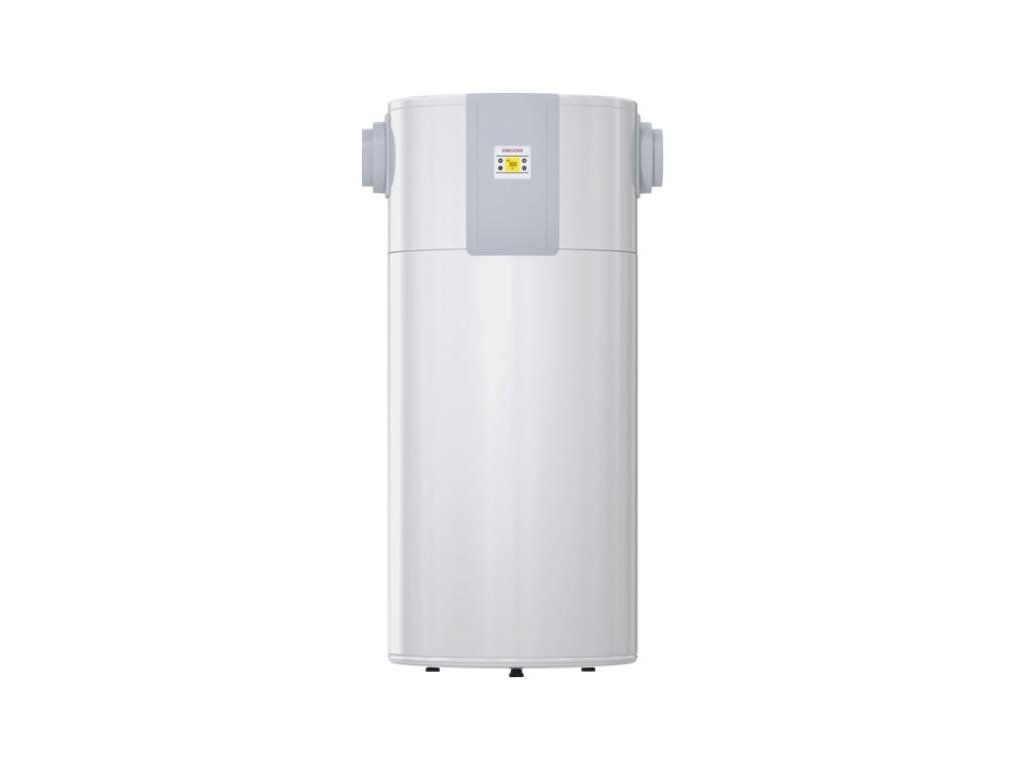
SHP-F 220 PREMIUM
220 l, with ducting
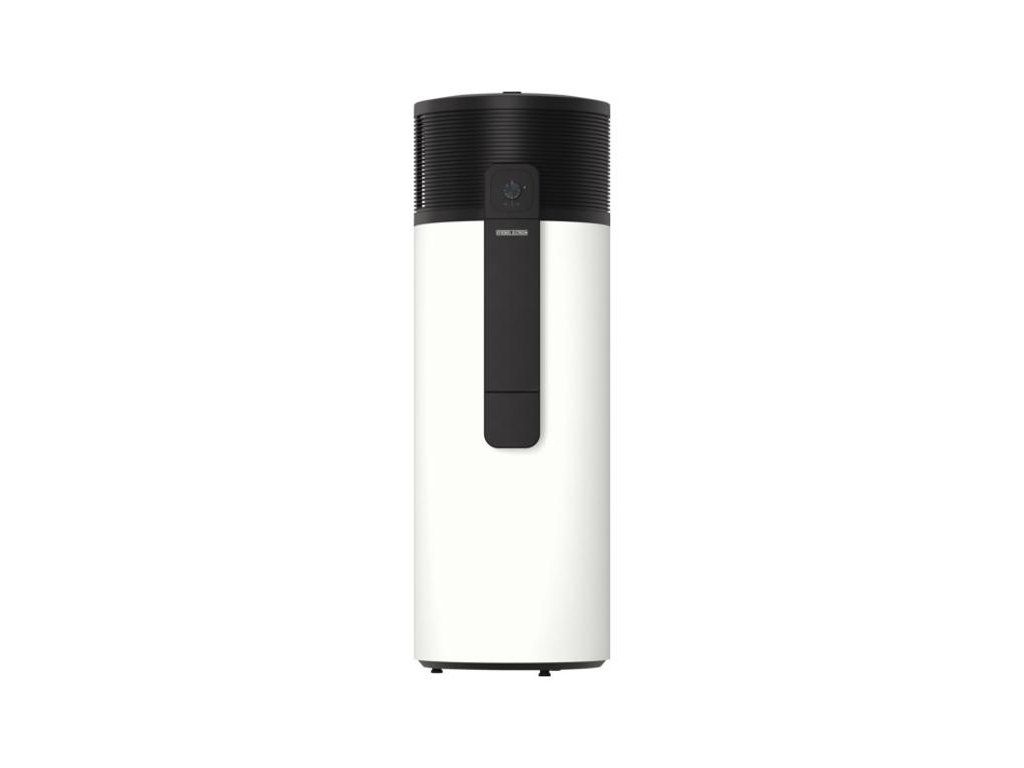
SHP-I 300 PLUS
300 l, indoor air
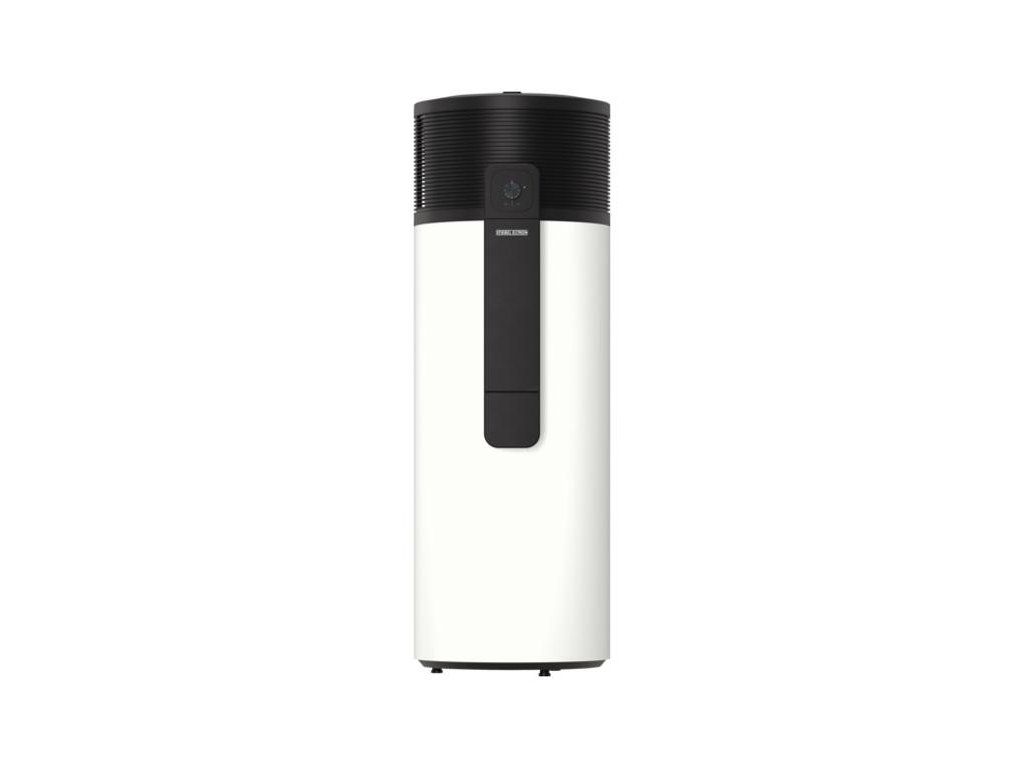
SHP-I 300 H PLUS
294 l, for cold rooms
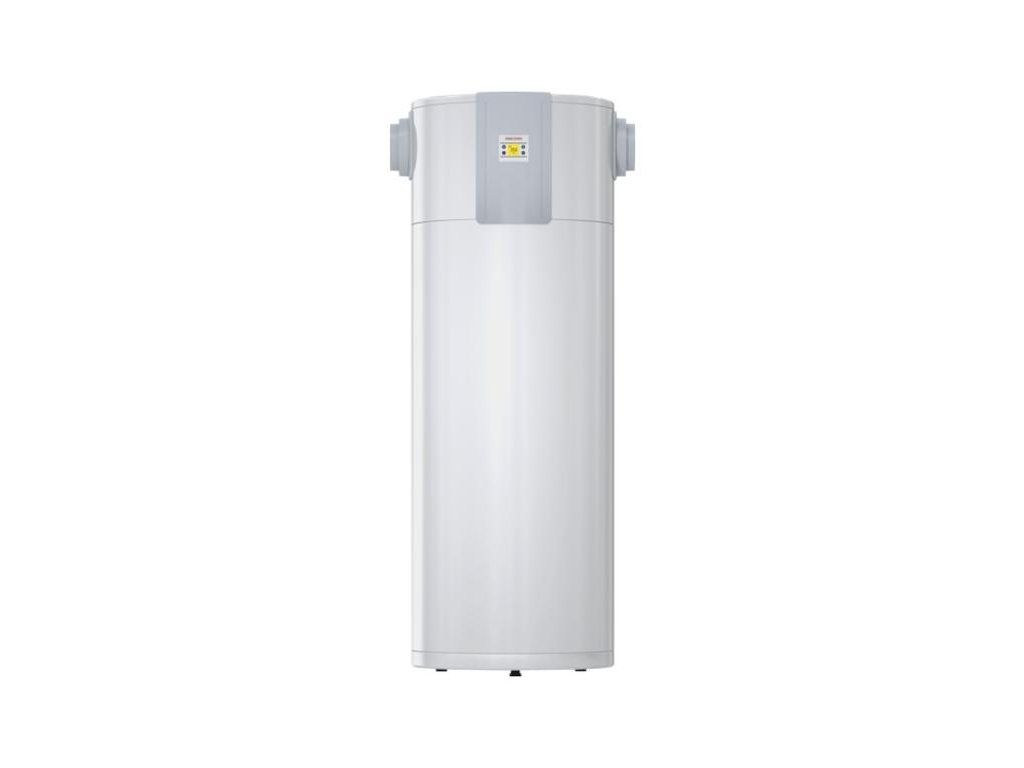
SHP-F 300 PREMIUM
300 l, with ducting
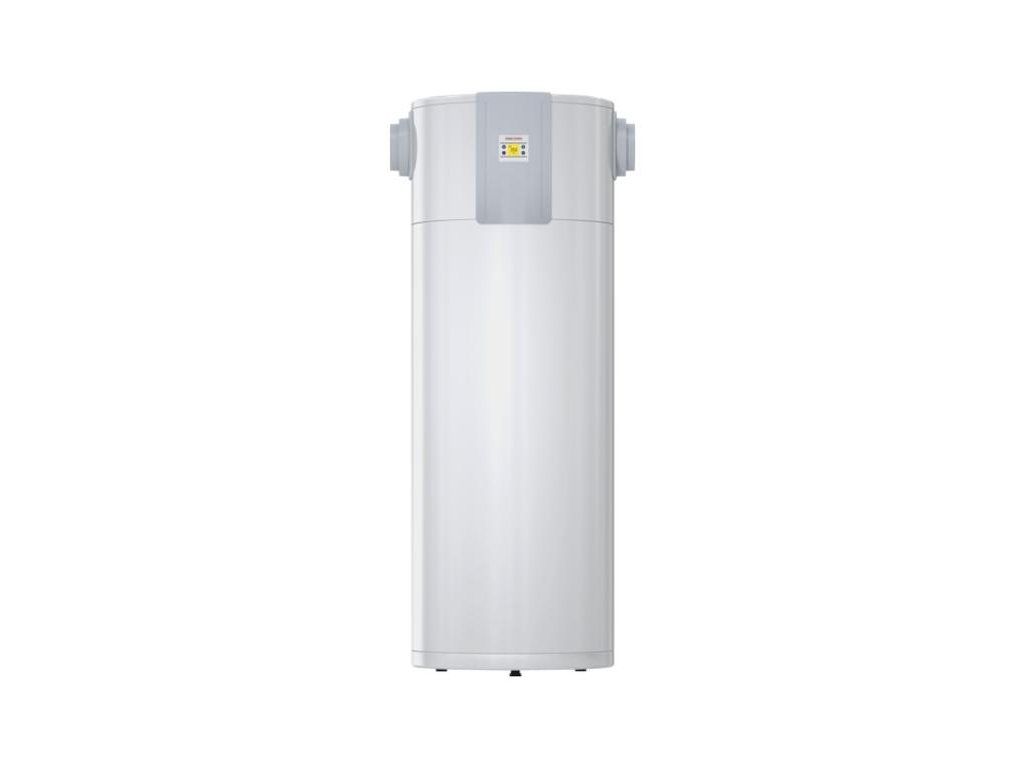
SHP-F 300 X PREMIUM
300 l, extended output
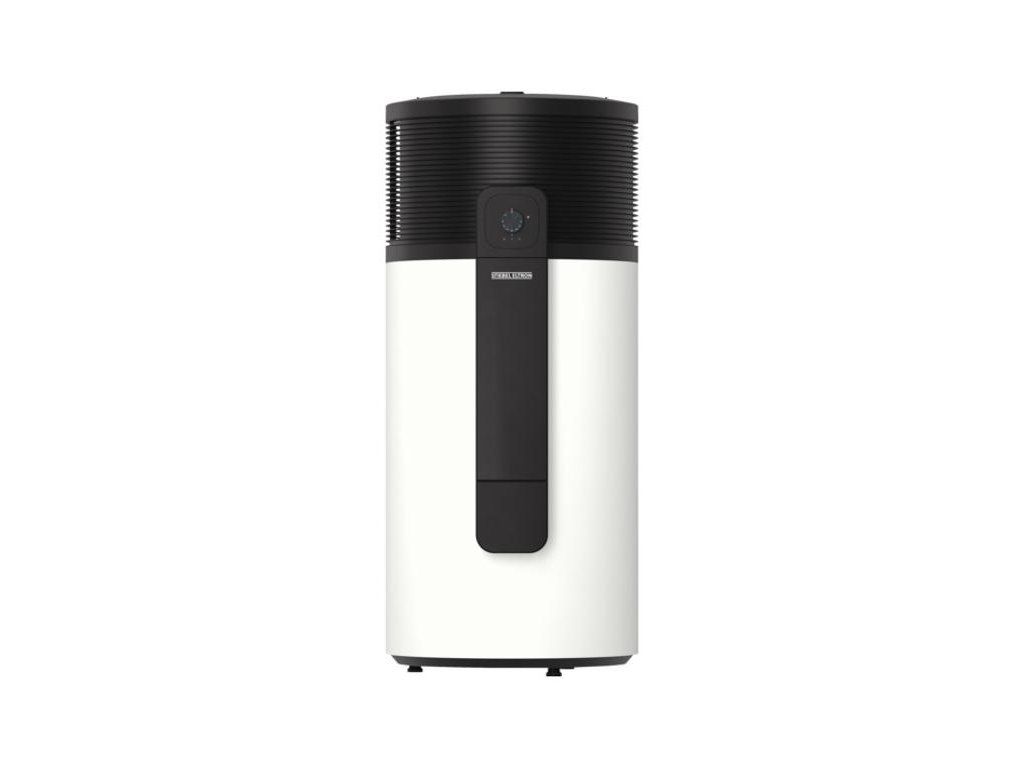
SHP-I 200 PLUS
200 l, compact
A full breakdown of costs: what goes into the total price?
Many customers make the mistake of thinking that the price of a heat pump = the price of the unit. In reality it is a complex investment with the following structure:
| Cost component | Hot water heat pump | Air-to-water heat pump (heating) | Ground-source heat pump |
|---|---|---|---|
| The unit itself | 1 000 – 3 000 € | 5 000 – 14 000 € | 8 000 – 18 000 € |
| Fitting and installation | 200 – 600 € | 1 500 – 4 000 € | 1 500 – 3 500 € |
| Groundworks / boreholes | — | — | 5 000 – 12 000 € |
| Electrical installation | 50 – 200 € | 300 – 800 € | 300 – 800 € |
| Alterations to the heating system | — | 500 – 3 000 € | 500 – 3 000 € |
| Inspection and commissioning | 100 – 200 € | 200 – 500 € | 200 – 500 € |
| TOTAL (indicative) | 1 350 – 4 000 € | 7 500 – 22 000 € | 15 000 – 35 000 € |
What to watch out for in quotations
Always check what is included in the price. Some suppliers quote the price of the unit without installation, without the electrical connection and without alterations to the pipework. Such an offer may look tempting, but the actual job will end up 30–50 % more expensive. Ask specifically: does the price include the design documentation? Inspection of the electrical installation? Condensate drainage? Commissioning and setting up the controls? These may seem like minor items, but on a larger installation they can inflate the invoice by hundreds of euros.
Energy prices in 2026 and their effect on payback
For Slovak households, 2026 brings stabilised but still relatively high electricity prices. After the turbulent years of 2022–2023 and gradual normalisation in 2024–2025, the average price of electricity for households in Slovakia is around €0.18 – 0.22/kWh (including distribution charges and taxes). Natural gas prices have stabilised at around €0.07 – 0.09/kWh, though with fixed distribution charges that push the overall cost of heating with gas upwards.
It is precisely in the context of these prices that a heat pump makes a great deal of sense. Heating with a direct electric heater at €0.20/kWh costs €0.20 for every kilowatt-hour of heat. A heat pump with a COP of 3.5 can produce 3.5 times more heat from the same amount of electricity – so the effective price of heat falls to approx. €0.057/kWh. That is comparable with gas, but without dependence on fossil fuel and without emissions in the building itself.
Real-life examples: how much does a hot water heat pump save?
Example 1: Family of 4, 150 l electric water heater, consumption ~3,200 kWh/year
The Novák family from Nitra had an old electric water heater rated at 2 kW. Their annual consumption for heating water was 3,200 kWh, which at a price of €0.20/kWh came to €640 a year. After installing an SHP-I 300 PLUS heat pump with a COP of 3.5, electricity consumption fell to approx. 915 kWh a year – so the cost of hot water dropped to ~€183. Saving: approx. €457 a year.
Purchase price of the unit + installation: approx. €2,800. Net payback period (without grants): 6.1 years. With a grant from the Zelená domácnostiam programme (if available, in the amount of €1,000): payback of 3.9 years. Not bad for an appliance with an expected service life of 20+ years.
Example 2: Couple without children, flat with an electric instantaneous water heater
In a block of flats with no central hot water supply, Mr Kováč installed a heat pump water heater with a capacity of 200 litres (SHP-I 200 PLUS). Annual consumption before installation: approx. 1,800 kWh with the electric instantaneous water heater. After installing the heat pump: approx. 530 kWh. Annual saving ~€254. Payback period (approx. €2,200 including installation): 8.7 years. Here too, every rise in the price of electricity shortens the payback.
Example 3: Guest house, hot water use by 8–10 people a day
Mrs Horáková runs a small guest house in the Low Tatras. The old 400-litre electric storage water heater used approx. 7,000 kWh a year, costing €1,400 a year. After installing an SHP-F 300 X PREMIUM heat pump (with the option of ducting air from outside, as the boiler room is small) and linking it to a small photovoltaic installation, consumption from the public grid fell to approx. 800 kWh a year. Cost of hot water: €160. Saving: €1,240 a year. With an investment of ~€4,500 (unit + installation + small PV system), the payback period is 3.6 years.
Air-to-water heat pump for heating: what will you really pay in 2026?
For a complete replacement of the heating system, the air-to-water heat pump is the most widespread choice. It works by extracting heat from the outdoor air – a modern heat pump can operate even in winter at temperatures of -15 °C, albeit at a lower COP. The key parameter is the SCOP (seasonal coefficient of performance), which better reflects real efficiency over the year.
In 2026 the prices of air-to-water systems in Slovakia are as follows:
- Small systems for low-energy houses (5–8 kW): unit €5,000 – 9,000, total investment including installation €8,000 – 14,000
- Medium-sized systems for ordinary family houses (8–12 kW): unit €8,000 – 13,000, total investment €12,000 – 19,000
- Larger systems for older, poorly insulated houses (12–16 kW): unit €11,000 – 16,000, total investment €16,000 – 25,000
An important warning: in older houses with radiators (rather than underfloor heating), the radiators may need to be replaced with larger ones – a heat pump works best at heating water temperatures of 35–45 °C, not at 70–80 °C like a boiler. This adaptation of the heating system can add €1,000 – 4,000 to the total price.
Ground-source heat pump: the highest investment, the highest performance
Geothermal systems (ground-to-water or water-to-water) are the most technologically advanced and the most efficient – their SCOP can exceed 5. The problem is the high initial investment, which consists mainly of groundworks: either horizontal collectors (a plot area of at least 200–400 m²) or deep boreholes (80–150 m per borehole, and you need 2–4 boreholes). The drilling alone costs €80–120 per linear metre, so with 3 boreholes of 100 m each we are talking about €24,000 – 36,000 for the boreholes alone.
This investment is only worthwhile if you plan to stay in the house for the long term (20+ years), you have the land available or the geological conditions are favourable, and the house is as energy-efficient as possible. For new builds in energy class A or A+, payback within 15 years can be realistic. For older houses this technology is economically attractive only in exceptional cases.
Grants and support schemes in 2026: how to reduce the initial investment?
In 2026 Slovakia is continuing several grant schemes that can significantly reduce the purchase costs:
Zelená domácnostiam III
The Zelená domácnostiam programme (currently in its third phase) continues to support renewable energy sources for households. The value of the voucher for a heat pump typically ranges from €1,500 to €4,500, depending on output and category. The conditions are: a permanently occupied property in Slovakia, installation of the appliance by a certified supplier from the SIEA list, and compliance with the technical parameters (minimum COP/SCOP value). For heat pump water heaters the conditions are less demanding than for heating systems.
Important: vouchers are issued within an allocated budget and are available until it is used up. In 2026 the allocation was increased again in connection with funds from the EU Recovery Plan, but there are traditionally more applicants than vouchers – so you need to follow the current calls on the SIEA website and submit your application in good time.
Recovery and Resilience Plan of the Slovak Republic
The Recovery Plan allocates support for insulation and the replacement of heating systems, and heat pumps are among the supported technologies. In 2026 some calls for municipalities and apartment buildings are still open, while for family houses they are mostly handled through SIEA.
Tax relief and VAT deduction
Sole traders who install a heat pump for business purposes as well (e.g. a guest house or rental property) can claim the VAT (20 %) as a deduction. This option does not apply to ordinary households, but the reduced VAT rate of 10 % on certain work connected with the renovation of dwellings continues to apply in 2026.
When is a heat pump worth it and when is it not?
A heat pump is not the answer for everyone. For the investment to be sensible, the following conditions should apply:
- You own the property – the investment only makes sense if you will benefit from the savings for at least 10–15 years.
- Your current system is expensive to run – if you heat with direct electric heaters or costly electric water heaters, the payback will be quick. If you have cheap gas or district heating, the payback takes longer.
- The house has at least basic thermal insulation – a heat pump for heating is not intended for extremely poorly insulated buildings, where it would have to run at full output all winter.
- The space requirements are met – a heat pump water heater needs a room with at least 15–20 m³ of air volume (or supply ducting), and an air-to-water heat pump for heating needs space for the outdoor unit.
- You have or are planning photovoltaics – the combination of PV + heat pump is synergistic: surplus solar electricity heats the water, which further shortens the payback on both investments.
When, on the other hand, a heat pump is not worth it
- You live in a block of flats with district heating at a favourable price per GJ.
- You plan to sell the property in 3–5 years (you will not reach payback).
- The house has high heat losses and you are not planning to insulate – the heat pump would have to be oversized and overpriced.
- You do not have enough air in the plant room and do not want to deal with ducting (for water heater models outside the PREMIUM series).
How to choose the right heat pump for hot water: practical criteria
When choosing a heat pump water heater, these parameters are decisive:
1. Cylinder capacity
The basic rule: approx. 50–60 litres per person per day at standard consumption. A couple will manage with 120–150 litres; a family of four needs 200–300 litres. If you have a large bath or take repeated showers, add a margin. For a household of 4 we recommend a cylinder of at least 200 l, ideally 300 l – oversizing the cylinder costs less than a capacity that is too small, where the hot water quickly runs out and the appliance has to top up with the electric heating element.
2. COP and energy class
Look for appliances with a COP of at least 3.0 and an energy class of at least A+. Premium models from Stiebel Eltron (the PLUS and PREMIUM series) achieve a COP of 3.5–4.2 at an air temperature of 15 °C and an outlet temperature of 55 °C – these are the real operating conditions in a plant room for most of the year.
3. Ducting connection vs. indoor air
If you have a large, well-ventilated cellar or basement (at least 20–25 m³ of air volume), the PLUS series models, which draw air directly from the room, will be sufficient. If the space is smaller or you want to install the appliance in an enclosed boiler room, go for the SHP-F PREMIUM series, with the option of supplying and discharging air through ducting.
4. Noise level
Modern heat pump water heaters from Stiebel Eltron emit 37–42 dB(A) of noise – comparable with a fairly quiet fridge. If the plant room is directly beneath a bedroom, this parameter needs to be taken into account. The PREMIUM and PLUS series have an advanced compressor with lower vibration and quieter running.
5. Control and connectivity
Intelligent control is standard today: setting a time programme, control via a Wi-Fi app, integration with a photovoltaic system (SG Ready mode) and connection to a smart home. Stiebel Eltron appliances support these functions in the PLUS and PREMIUM series, which is particularly practical when you want to heat water automatically at times when electricity is cheaper (night rate) or when your PV installation is producing surplus energy.
Combining a heat pump with a photovoltaic system: a synergy that pays off
2026 is the year in which most new PV installations in Slovakia come with intelligent consumption management. The combination of PV + a heat pump water heater is one of the most sensible energy strategies for a family house. Why?
- Heat can be stored cheaply in a cylinder – the cylinder acts as a battery for surplus solar energy.
- When the PV system produces more than the house consumes, the smart controller switches on the heat pump and “charges” the cylinder with hot water.
- This reduces the need to sell surpluses to the grid at a low feed-in price; the energy is used directly in the house instead.
- In summer, when PV output is at its highest, the cost of hot water can be practically zero.
A practical example: a household with a 6 kWp PV installation and a 300 l hot water heat pump can cover 80–95 % of its hot water costs from its own generation in the summer months. The annual saving in combination with the heat pump (compared with an electric water heater without PV) can reach €600–800, which radically shortens the payback period.
Servicing, warranties and long-term costs
A heat pump is an appliance with moving parts (the compressor), so you need to allow for regular service inspections. With heat pump water heaters the situation is much simpler than with heating systems – the refrigerant circuit is sealed and no annual service is required (unlike gas boilers); a check every 2–3 years is recommended.
- Warranties: Premium brands (Stiebel Eltron) offer warranties of 2–5 years on the appliance and up to 5 years on the cylinder. An extended warranty can be obtained by registering the product.
- Service life: The compressor in a heat pump water heater typically lasts 15–25 years, the cylinder 20–30 years.
- Servicing costs: Preventive check €80–150, compressor replacement if needed €400–800. Overall, allow €500–1,200 for servicing over 20 years of operation.
Frequently asked questions (FAQ)
Is a heat pump also suitable for a block of flats or a flat?
A heat pump water heater can also be installed in a flat if you have a utility room, boiler room or bathroom with a sufficient volume of air (at least 15–20 m³). For flats with a central hot water supply it generally makes no sense. Flats with their own electric water heater, on the other hand, are the ideal target group – the changeover is relatively simple and the saving is real. Heat pumps for heating (air-to-water) are not installed in blocks of flats – the heating system is central.
How much electricity does a hot water heat pump actually use?
For a typical household of 4 with a 300 l heat pump cylinder and a COP of 3.5, annual electricity consumption is approx. 900–1,200 kWh. By comparison, a traditional electric water heater of the same capacity uses 3,000–3,800 kWh a year. That is a threefold difference – and it is exactly where the economic basis of this technology lies.
What is the minimum room size for installing a heat pump water heater?
For models with indoor air intake (the SHP-I PLUS series), the recommended minimum is 20–25 m³ of room volume. The appliance extracts heat from the surrounding air, so in a smaller space the room would cool down quickly and efficiency would fall. The solution is the SHP-F PREMIUM series, where you supply and discharge air through flexible ducting from another room or from outside – the space restriction practically disappears.
Can a heat pump also work in winter, when the boiler room is cold?
Heat pump water heaters work efficiently at air temperatures from approx. +5 °C to +35 °C. At lower temperatures (for example in an unheated store below freezing) the COP drops significantly or the appliance switches to backup electric heating. Special models are intended for cold spaces – for example the SHP-I 300 H PLUS or SHP-F 300 X PREMIUM – which are optimised for cooler operating conditions and run efficiently even at temperatures around 0 °C.
Do I need any kind of permit to install a heat pump?
No building permit is needed for a heat pump water heater – it is the replacement of an appliance within an existing installation. However, the electrical installation must be carried out by a qualified electrician and the appliance must undergo a professional inspection. For air-to-water heat pumps for heating, the situation depends on the location of the outdoor unit and on local regulations – sometimes notification of minor building work is required, or the neighbours' consent where there is a shared wall.
Is a heat pump worth it even without a grant?
Yes, in many cases it is. A heat pump water heater with an investment of approx. €2,500–3,000 and an annual saving of €400–500 pays for itself in 5–7 years – without any grant at all. With heating systems and investments above €15,000, the payback without a grant extends to 10–15 years, which is still acceptable given an expected service life of 20+ years. A grant helps, of course – but it is not a condition for the investment to be worthwhile.
Conclusion: how should you approach a heat pump in 2026?
A heat pump is not a product you buy on impulse. It is an investment that calls for an analysis of your particular situation – what kind of house you have, what your current energy costs are, how much space you have for the installation and what your long-term plans for the property are. At the same time, it is an investment that really does pay off at today's energy prices – even without a grant, although a grant will shorten the payback period considerably.
If you are looking for an entry point – a sensible and affordable solution that brings you measurable savings from the very first year of operation – a heat pump water heater is exactly that. The Stiebel Eltron SHP-I PLUS and SHP-F PREMIUM series available from ATRIA are the choice where technological reliability, a long service life and a reasonable purchase price go hand in hand. You choose the specific model according to cylinder capacity, the space available and whether you need ducting – in any case you are investing in technology that will serve you for 20 years or more.
Also bear in mind that energy prices may still move upwards in 2026–2030 – every increase shortens your payback period and raises the overall return on the investment. The sooner you decide, the more you will save.
Do you have a question about this topic?
Can't decide, or dealing with a specific situation in your home? Write to us – we will be glad to advise.