
How to choose a condensing boiler: a complete guide for households (2026)
Choosing a condensing boiler is one of those decisions that will affect your comfort and the size of your energy bills for the next 15 to 20 years. Even so, most people spend less time on it than on buying a smartphone. The result? An oversized boiler in a small flat, needlessly high bills or needlessly frequent service call-outs. This article will help you avoid that – it covers the subject systematically, with specific figures, practical examples and the current context of 2026.
Why a condensing boiler – and not something else?
Before we get down to choosing a specific model, it is important to understand what a condensing boiler does differently from an older standard gas boiler. The principle is simple, but the consequences are fundamental.
A conventional boiler burns natural gas and sends the flue gases – together with water vapour and unused heat – out through the chimney. A condensing boiler additionally contains a secondary heat exchanger in which these flue gases are cooled to the point where the water vapour in them condenses. Condensation releases what is known as the latent heat of condensation, which would otherwise go to waste. Thanks to this, a condensing boiler can achieve an efficiency of 98–109 % (measured against the net calorific value of the fuel), whereas an older boiler is around 80–87 %.
In practice this means that for every 100 € you pay for gas, you get 15–25 € more heat from a condensing boiler than from an old non-condensing boiler. For an average Slovak household with annual heating costs of around 800–1 400 € (depending on the size of the house, year of construction and location), that is a saving of 120–350 € a year. The investment therefore realistically pays for itself in 5–9 years.
Since 26 September 2015 the ErP (Energy-related Products) regulation has applied throughout the EU, banning the sale of non-condensing boilers with an output of up to 70 kW for new installations. Condensing boilers are therefore not just a passing trend – they are the de facto standard for every new installation or boiler replacement.
Types of condensing boiler – what to get clear right at the start
Condensing boilers are divided according to several criteria. The first two matter most when choosing: the type of installation (wall-hung vs. floor-standing) and the domestic hot water function (heating only vs. combination).
Wall-hung vs. floor-standing boiler
Wall-hung condensing boilers are by far the best-selling type for houses and flats today. They are mounted on the wall, are compact (commonly 40–70 cm high), visually unobtrusive and quicker to install. Most models have an output of 15–35 kW, which covers the needs of the vast majority of Slovak households.
Floor-standing boilers stand on the floor and usually have a higher output (from 25 kW to several hundred kW). They are used for larger houses, blocks of flats or commercial buildings. In an ordinary house or flat there is no justification for them.
Heat-only (solo) vs. combi boiler
A heat-only (solo) boiler provides heating only. You deal with domestic hot water (DHW) separately – with a storage water heater or hot water cylinder. This combination is suitable if you have a large hot water cylinder or a large household with high DHW consumption, where instantaneous heating would not keep up.
A combi boiler (combi)** has a built-in instantaneous or storage heat exchanger for heating hot water. Instantaneous combi boilers heat water on demand, with no waiting, but their DHW output is limited. Storage combi boilers (with an integrated cylinder, usually 50–100 litres) are a compromise between the convenience of a cylinder and compact dimensions.
For a flat or smaller house with 1–2 bathrooms, an instantaneous combi boiler is the ideal solution – it saves space and there is no cylinder to worry about. For a larger house with 3 or more bathrooms, or if you run a shower and a bath at the same time, we recommend a solo boiler with a hot water cylinder of 150 litres or more.

Wall-hung condensing combi boiler BOSCH Condens GC2300iW 22/25 C – instantaneous DHW heating, suitable for flats and smaller houses
How to calculate the boiler output you need correctly
This is perhaps the most important part of the whole selection process. An oversized boiler runs in what is known as cycling – it briefly fires at full output, then switches off, fires again... Every such cycle speeds up the ageing of the boiler and also lowers its seasonal efficiency. An undersized boiler, on the other hand, cannot keep the house warm in severe frost.
An exact calculation of a building's heat loss is carried out by a heating designer in accordance with STN EN 12831. For a rough estimate, however, a simple formula is enough:
Practical calculation examples
- Flat in a panel block, 75 m², built in 1978, partly insulated: 75 × 70 W/m² = 5 250 W → boiler 6–8 kW. Many people in a flat like this have a 24 kW boiler installed, which is drastic oversizing.
- Detached house, 140 m², built in 1995, uninsulated: 140 × 75 W/m² = 10 500 W → boiler 12–15 kW with a margin.
- Detached house, 180 m², built in 2005, insulated: 180 × 50 W/m² = 9 000 W → a 12–15 kW boiler is sufficient.
- Larger detached house, 220 m², built in 1985, uninsulated: 220 × 90 W/m² = 19 800 W → boiler 22–25 kW.
An important detail: if you also plan to connect pool heating to the heating system, or you have a very large storage tank, add a further 20–30 % to the calculated output.
For most Slovak flats (up to 90 m²) from the 1980s and 1990s, a boiler with an output of 15–18 kW is sufficient. For houses of up to 160 m² the typical range is 18–24 kW. Boilers above 25 kW are intended for larger houses, or buildings with combined DHW storage and a heated area of more than 200 m².
Overview of specific models: BOSCH Condens GC2300iW and GC8700iW
A handful of brands dominate the Slovak market – Bosch, Vaillant, Viessmann, Baxi, Ferroli, Protherm. To illustrate a real-life choice, we will look at the BOSCH Condens range, which is among the most popular condensing boilers in Slovakia.
BOSCH Condens GC2300iW – the series for flats and smaller houses
The GC2300iW range covers outputs from 15 to 25 kW and is made in two versions: a solo heating boiler (suffix “P") and a combi boiler with instantaneous DHW heating (suffix “C"). The series sits in the mid-price category, yet its technical specification matches boilers a class higher.

BOSCH Condens GC2300iW 15 P – a 15 kW solo condensing boiler, ideal for flats and smaller houses
The BOSCH Condens GC2300iW 15 P is a solo boiler with an output of 15 kW, intended exclusively for heating. Hot water is handled by an external cylinder. It suits flats of 60–100 m² from the 1970s–1990s or smaller houses that have been insulated. Its advantage is a low minimum output (2,8 kW), which means considerably less cycling in the transitional seasons.

BOSCH Condens GC2300iW 24 P – a 24 kW solo condensing boiler for larger houses
For larger houses of 140–200 m² there is the BOSCH Condens GC2300iW 24 P with an output of 24 kW. This version is popular precisely where you want to run the boiler together with a large DHW cylinder (150–200 l), giving comfortable hot water for the whole family.
The combi boiler BOSCH Condens GC2300iW 22/25 C combines a heating output of 22 kW with instantaneous DHW heating of up to 25 kW. For a flat with one bathroom and a kitchen this solution is ideal – there is no cylinder, and you save both space and money. When hot water is drawn at two points at once (e.g. shower + washbasin), the flow rate may be somewhat lower, which is worth considering for a larger family.
BOSCH Condens GC8700iW – the premium series for the demanding
The GC8700iW range represents the upper class of the BOSCH portfolio. Boilers in this series have more intelligent control, quieter operation and more precise output modulation, and are fully ready for integration with smart thermostats and smart home systems.
The BOSCH Condens GC8700iW 30 P is a solo boiler with an output of 30 kW. It suits larger houses (180–260 m², built before 2000, uninsulated) or buildings combining heating with stored DHW via an external cylinder. The series is also suitable for modern low-temperature heating systems (underfloor heating, large-surface radiators), where condensation takes place under optimum conditions and efficiency is at its maximum.
The BOSCH Condens GC8700iW 30 PB version has the same output, but has built-in provision (or a direct connection) for an external cylinder and is adapted for bivalent systems – that is, combination with a heat pump or solar energy. This makes it very interesting for the future: if you install a gas boiler today and add a heat pump in a few years' time, the PB version is already designed with that combination in mind.
Controls and smart thermostats – a key part of the system
A boiler without good controls is like a powerful car with a half-working steering wheel. The controls decide when the boiler fires, at what output, and what flow temperature it sets. Modern condensing boilers work in two basic control modes:
- Thermostat control: A room thermostat sets the target temperature. When the temperature falls below that value, the boiler switches on. Simple, but it does not use the full potential of condensing.
- Weather-compensated control: The boiler adapts the boiler water temperature to the outdoor temperature according to set curves. At minus 15 °C it heats the water to a higher temperature, at 5 °C to a much lower one. The result is smoother running, less cycling and greater savings – usually 10–15 % compared with simple thermostat control.
In 2026 there are also smart Wi-Fi thermostats, which you can control from your mobile anywhere in the world, set weekly programmes on and use to monitor energy consumption. One of the most popular on the Slovak market is the Bosch Easycontrol CT 200.
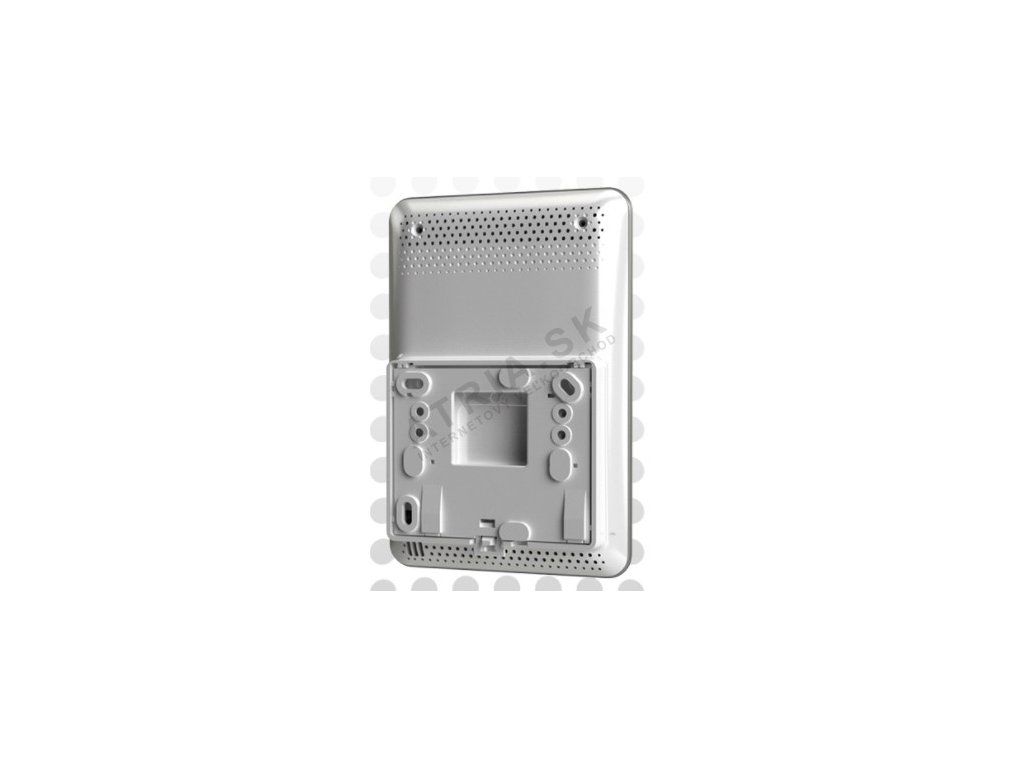
Bosch Easycontrol CT 200 – a smart Wi-Fi thermostat, controlled via smartphone from anywhere
The Bosch Easycontrol CT 200 integrates easily with condensing boilers in the Condens range and allows daily and weekly scheduling, presence detection and remote control. In terms of savings: a correctly programmed smart thermostat can cut consumption by a further 5–12 % compared with a manual thermostat. With average costs of 1 000 € a year, that means a further 50–120 € on top of the saving from the condensing boiler itself.
Flue systems: concentric pipe vs. twin-pipe system
Condensing boilers do not need a conventional masonry chimney. Instead they use plastic or stainless steel pipes to discharge the flue gases and supply combustion air. There are two basic solutions:
Concentric (double-wall) pipe
A pipe within a pipe – the inner one takes the flue gases away, while the outer jacket brings in fresh air from outside. A single penetration through the wall or ceiling, a simple solution. Limitation: the maximum length is usually 5–8 metres (equivalent length including bends). Suitable for flats and smaller houses where the boiler is close to an external wall.
Twin-pipe (LAS) system
Two separate pipes – one for flue gases, the other for air. The length can be 25 metres or more (depending on the model). Suitable for houses where the boiler is further from an external wall, or where you want to use the original chimney flue for the flue gases and bring the air in separately.
Important notice: If you are refurbishing an old flat that had a gas appliance with an open combustion chamber (e.g. an old Amos boiler or a gas water heater), the new condensing boiler must have a sealed combustion chamber (turbo) with its own air supply. It does not take air from the room. This is a legal requirement and also a safety standard.
Condensing boiler and underfloor heating – the ideal combination
A condensing boiler works most efficiently when the heating system runs at low temperatures. This means that the temperature of the water returning from the radiators to the boiler should be as low as possible – ideally below 57 °C, the point at which condensation starts to take place.
Underfloor heating typically works with a flow temperature of 35–45 °C and a return of 25–35 °C. For a condensing boiler this is the ideal situation – condensation takes place continuously, efficiency is at its maximum and the boiler runs quietly and smoothly without cycling.
Low-temperature radiators (larger surfaces, panel radiators) work at 55/45 °C or 50/40 °C. Condensation occurs here too. The problem arises with old cast iron radiators sized for 90/70 °C – the boiler runs, but condensation is minimal and its efficiency approaches that of old non-condensing boilers. If you have an older system, consider replacing at least some of the radiators with larger panel ones, or oversize the radiators (taller units) so that you can lower the flow temperature.
Current energy prices and return on investment (2026)
In Slovakia, natural gas prices for households rose sharply after 2022, and although they have partly settled since their peaks of 2022–2023, they remain substantially higher than before 2021. In 2026 the price of gas for an ordinary household is typically in the range of 0,065–0,085 €/kWh (including distribution and all charges, excluding VAT), depending on the supplier and tariff.
A new condensing boiler typically costs (installation including the boiler and basic accessories) 1 800–3 500 €, of which the boiler itself accounts for 900–2 000 € and the rest is installation, inspection and accessories. Premium models with smart controls and a DHW cylinder can reach 4 000–5 500 €.
With an average annual saving of 200 €/year (a conservative estimate for a 150 m² house with an original non-condensing boiler) and an installed price of 2 500 € for the condensing boiler, the payback period is 12–13 years. If the original boiler is old and less efficient, or if you have so far been heating with an electric boiler, the payback can be considerably shorter – 6–8 years.
Legislation and subsidies in 2026
For 2026, several important legal facts apply in Slovakia that affect the choice and financing of a boiler:
- ErP Regulation (EU 813/2013): Still in force. It bans the sale and installation of non-condensing boilers below 70 kW. Every new boiler you buy today must be a condensing one.
- Revision of the Energy Performance of Buildings Directive (EPBD): The European Union is moving towards a ban on new installations of gas boilers in new buildings from 2030 (as part of Fit for 55). For existing buildings and refurbishments, however, gas condensing boilers remain a valid option until at least 2035–2040.
- Zelená domácnostiam (Green Households) subsidy scheme (SK): The programme supporting renewable sources (heat pumps, solar collectors, photovoltaics) for houses continues, but gas boilers are not currently subsidised under this scheme. If you plan to combine a gas boiler with a heat pump (a bivalent system), part of the investment in the heat pump may be eligible for a subsidy.
- Inspection and checking of boilers: Act No. 314/2012 Coll. (on the regular inspection of heating systems) imposes an obligation to have boilers with an output above 20 kW inspected regularly. For domestic customers with a boiler of up to 20 kW, an inspection is required once every 5 years.
What not to forget when buying and installing
Choosing the boiler is only the start of the process. For the installation to go smoothly and the boiler to work reliably, you also need to think about these factors:
Water quality in the system
Condensing boilers have an aluminium or stainless steel heat exchanger, which is sensitive to the hardness and chemical composition of the water. Hard water (above 15 °FH – French degrees) deposits limescale and shortens the life of the heat exchanger. It is advisable to install a water softener or a water treatment filter for filling/topping up the system. Manufacturers (including BOSCH) specify the required water parameters in their warranty conditions.
Condensate neutraliser
The condensate produced in the boiler has an acidic pH (3,5–4,5). Under current legislation (and manufacturers' recommendations) it should be neutralised before being discharged to the drain. A neutraliser is an inexpensive (20–50 €) plastic container filled with limestone granules, fitted on the boiler's condensate outlet. Some modern boilers have one built in.
Expansion vessel and safety valve
Every sealed heating circuit must have an expansion vessel (which takes up the thermal expansion of the water) and a safety valve (which protects against overpressure). When replacing a boiler, always check the condition of the existing expansion vessel – the diaphragms in them age, and a faulty expansion vessel causes the safety valve to open and water to be lost unnecessarily.
Cleaning and servicing
A condensing boiler requires regular maintenance – ideally once a year before the heating season. The service engineer checks the burner, the heat exchanger, the condensate drain, the tightness of the gas joints and the combustion settings, and makes sure the boiler is running at optimum efficiency. The price of an annual service ranges from 60 to 130 €, depending on the boiler output and the service company.
Practical scenarios: which boiler for which household?
Scenario 1: Flat in a panel block, 65 m², one bathroom, family of 3
Required output: approx. 6–9 kW (for a flat in a panel block with insulation of the whole building, the required output may be even lower). Ideal solution: a 15 kW combi boiler (the lowest output available among standard boilers) with a good modulation ratio. For example the BOSCH Condens GC2300iW 15 P with an external 80–100 l cylinder, or a combi boiler with instantaneous heating. A smart thermostat (e.g. Bosch Easycontrol CT 200) will help considerably with control, since the boiler will have to run at a much lower output than its rated one.
Scenario 2: Detached house, 150 m², built in 1992, uninsulated, two bathrooms
Required output: approx. 14–18 kW. Solution: an 18–24 kW solo condensing boiler (e.g. BOSCH Condens GC2300iW 24 P) + a 150 l DHW cylinder. For two bathrooms a cylinder is almost essential – an instantaneous combi boiler would not keep up when both are in use at once. We recommend weather-compensated control with an outdoor temperature sensor.
Scenario 3: Larger detached house, 230 m², built in 1985, partly insulated, underfloor heating on the ground floor + radiators upstairs
Required output: approx. 20–25 kW. Solution: a higher-output condensing boiler (e.g. BOSCH Condens GC8700iW 30 P) with weather-compensated control and a manifold for a mixed heating circuit (mixing valve for the underfloor heating, direct circuit for the radiators). DHW cylinder of at least 200 l. The investment is higher, but a house of this size deserves a proportionate solution.
Scenario 4: New build, low-energy house, 180 m², combination with a heat pump under consideration
Heat loss: approx. 5–7 kW (actual, not indicative). Solution: a bivalent system – an air-to-water heat pump as the primary source + a condensing boiler as the backup and peak-load source. The BOSCH Condens GC8700iW 30 PB is designed specifically for this kind of combination. The heat pump covers 80–90 % of the heat demand, and the boiler “tops up" only in the hardest frosts (below –7 °C), which makes it extremely cost-effective.
The most common mistakes when choosing a condensing boiler
- Choosing a boiler that is too big: By far the most common mistake. A 24 kW boiler in a 70 m² flat is oversized, cycles and runs inefficiently.
- Ignoring water quality: Untreated hard water can destroy an aluminium heat exchanger in 5–7 years.
- Skimping on controls: A cheap 20 € thermostat hands the money saved on the boiler back to your gas bills. Good controls are part of the investment.
- Forgetting about condensate: Without a condensate neutraliser you risk problems with both your drains and your warranty.
- No service contract: A boiler without regular servicing ages faster. Take out a service contract for the first 2–3 years.
- Underestimating installation: A cheap installation by an unqualified fitter can end up costing more than the euros saved – air flow, system pressure and combustion settings are technical parameters, not just “connecting the pipes".
Frequently asked questions (FAQ)
Which condensing boiler should I choose for a flat in a panel block?
For a standard panel-block flat (55–80 m²) with one bathroom, a combi boiler with an output of 15–18 kW is sufficient. More important than output is a good modulation ratio – the boiler should be able to go down to 20–25 % of its rated output so that it does not have to cycle on warm days. If the flat has a hot water cylinder, consider a solo boiler with a lower output. A smart thermostat is the ideal addition – the Bosch Easycontrol CT 200 handles programme setting, remote control and consumption monitoring.
Is a condensing boiler really more economical, or is it just marketing?
It is a verifiable physical reality, not marketing. A condensing boiler really does use the latent heat of condensation of the water vapour in the flue gases, which gives it an efficiency of 98–109 % (measured against the net calorific value of the gas). Compared with an old boiler (80–85 % efficiency), the difference is a real 15–20 % of annual consumption. When switching from a very old boiler (1960s and 1970s), savings of as much as 30–40 % have been recorded.
Do I also need a new chimney for a condensing boiler?
Usually not. Condensing boilers with a sealed combustion chamber (turbo) use plastic (PP) or stainless steel concentric pipework for flue gas discharge and air supply, which is routed through a wall or through the original chimney flue (in that case, however, the chimney needs lining and the draught must be checked). The original masonry chimney is therefore not necessary, but if you want to use it, it must be lined with a liner that is resistant to the moist, acidic flue gases from a condensing boiler.
How long does a condensing boiler last?
The average service life of a well-maintained condensing boiler is 15–20 years. Key factors: regular servicing (once a year), water quality in the system, correct sizing (an oversized boiler cycles and ages faster) and correct installation. The heat exchanger – the most expensive component – will last the whole life of the boiler, provided the water quality conditions are met.
Can I add a heat pump to a gas condensing boiler later?
Yes, and it is a very sensible strategy. There are what are known as bivalent systems, in which a heat pump (air-to-water or ground-to-water) covers most of the heat demand and the gas boiler “tops up" in extreme frosts, when the heat pump is not enough or is uneconomical to run. A model such as the BOSCH Condens GC8700iW 30 PB, which is designed specifically for bivalent connection, is suitable for this kind of combination.
What does it cost to install a condensing boiler in Slovakia in 2026?
The price of installing a wall-hung condensing boiler ranges from 400 to 900 € for labour (excluding the price of the boiler and materials). To this you need to add accessories: a concentric or twin-pipe flue (80–300 € depending on length and material), an expansion vessel (if it is being replaced), a condensate neutraliser, non-return valves and the gas inspection. The total cost of labour and materials (excluding the price of the boiler) commonly ranges from 600 to 1 500 €. We recommend asking for at least two quotations from certified installers.
Conclusion: how to go about it step by step
Choosing a condensing boiler need not be complicated if you proceed methodically:
- Determine the heat loss of the house – at least roughly, from the floor area and year of construction. Do not buy a boiler “with something in reserve" – bigger does not mean better.
- Decide: combi or solo? For flats and smaller houses with one bathroom, an instantaneous combi boiler. For larger houses or households with higher DHW consumption, a solo boiler + cylinder.
- Take the type of heating system into account – underfloor heating and low-temperature radiators allow maximum condensation. Consider replacing or oversizing old high-temperature radiators.
- Invest in good controls – the thermostat is just as important as the boiler. A smart Wi-Fi thermostat such as the Bosch Easycontrol CT 200 pays for itself within 2–3 years.
- Do not forget the technical details – water quality, condensate neutraliser, gas inspection, service contract.
- Think about the future – if you are considering a heat pump, choose a boiler that is ready for bivalent connection (e.g. GC8700iW 30 PB).
A condensing boiler is a long-term investment which, if chosen and looked after properly, will pay for itself in savings, improve your heating comfort and reduce your home's emissions. Whether you opt for the compact GC2300iW 15 P for a smaller house or the premium GC8700iW 30 P for a larger property – the important thing is to choose the boiler that fits your needs exactly, not the one with the biggest number on the box.
Do you have a question about this topic?
Can't decide, or dealing with a specific situation in your home? Write to us - we will be glad to advise.