
Underfloor Heating and a Condensing Boiler
Maximising Efficiency in Heating Systems: The Role of Condensing Boilers and Underfloor Heating
When you're planning to upgrade your heating system or install one in a new home, you might have heard that pairing underfloor heating with a condensing boiler is one of the best choices you can make. This isn’t just marketing – it's a combination grounded in physics and engineering. Understanding why this setup works so well will help you make the most of your investment and reduce your energy bills significantly.
High Return Temperatures Limit Condensing Boilers’ Efficiency
Condensing boilers are more efficient than traditional boilers because they can extract additional heat from the water vapour in exhaust gases. For this to happen, the flue gases need to be cooled below the dew point (approximately 55 °C). When the water returning to the boiler from the heating system is too warm—typically above 45–50 °C—it prevents the full condensation process from taking place. This means the boiler is missing out on a key part of its potential efficiency gain. In this scenario, the boiler still performs better than a standard atmospheric boiler, but it can’t reach its highest efficiency levels.
Low-Temperature Systems Enable Full Condensation
To get the most out of a condensing boiler, the return water temperature must stay well below the dew point. This is where underfloor heating excels. Unlike radiators, which require higher water temperatures (55–70 °C at the inlet) to effectively heat a room, underfloor heating uses the entire floor surface to radiate heat. This large surface area allows the system to operate efficiently even with much lower water temperatures—often between 30–45 °C at the inlet. As a result, the return water temperature stays well below the dew point, enabling the boiler to condense continuously throughout the heating season.
Optimal Performance through the Right System Combination
The combination of underfloor heating and a condensing boiler allows the boiler to operate near its theoretical maximum efficiency, often reaching real efficiencies of 108–109% relative to the net calorific value of the gas. This means you're extracting more usable heat from the same amount of fuel compared to other setups. In contrast, while radiators paired with a condensing boiler still offer good savings over traditional boilers, they can’t match the full potential of underfloor heating in terms of energy efficiency and cost savings.
The condensation principle, explained in detail in the article below.
How This Combination Is Actually Connected
What happens if a house uses only underfloor heating?
When underfloor heating is the only source of heating in a house, the setup is straightforward. The boiler supplies hot water directly to the underfloor heating manifold, which distributes it to individual loops in each room. The manifold often includes a mixing unit that regulates the water temperature—usually limiting it to 45–50 °C to avoid damaging floor coverings. Some modern condensing boilers are factory-configured for low-temperature operation and may not need an external mixing unit. However, the exact connection always requires approval from a designer or qualified installer based on the specific system design.
How can I connect underfloor heating and radiators in one house?
When a house has underfloor heating in some areas (such as the kitchen or bathrooms) and radiators in others, two separate circuits are needed—one at a higher temperature for radiators and a lower one for underfloor heating. This is managed using a mixing unit with a three- or four-way valve that blends cooler return water with hot boiler water to achieve the correct low temperature for the floor loops. The radiators remain connected to the boiler at the higher temperature for effective heating.
What insulation is needed for wet underfloor heating?
When installing underfloor heating with the wet method—where pipes are embedded in a concrete screed—it is essential to use high-quality insulation boards beneath the piping. These boards prevent heat from escaping downward into the ground or neighboring spaces and ensure it rises efficiently into the room. Here’s an example of a suitable product from our range:

|
System Insulation Board UHP55 for Underfloor Heating (STIROTERMAL BASIC) – a system board with moulded studs for holding the pipes in place, designed for wet-process installation of hot-water underfloor heating. It provides thermal and partial acoustic insulation under the screed, so that low-temperature heating water releases its heat where it's meant to go – into the room, not into the structure. Price from €11.72/m². |
Low-Temperature Operation and Modulation Range for Condensing Boilers
Imagine you're installing underfloor heating and selecting a condensing boiler. If the boiler cannot handle low outlet temperatures or modulate its output effectively, it might struggle to provide consistent warmth without unnecessary cycling. A well-designed condensing boiler for underfloor heating must be able to operate stably at low temperatures and adjust its output precisely to match the house's current heat demand.
During transitional seasons like spring or autumn, the system may only require a small amount of heat. A boiler with a wide modulation range can respond to this demand without switching on and off frequently. This not only improves efficiency but also prolongs the boiler’s lifespan. These features are crucial when pairing a condensing boiler with underfloor heating.
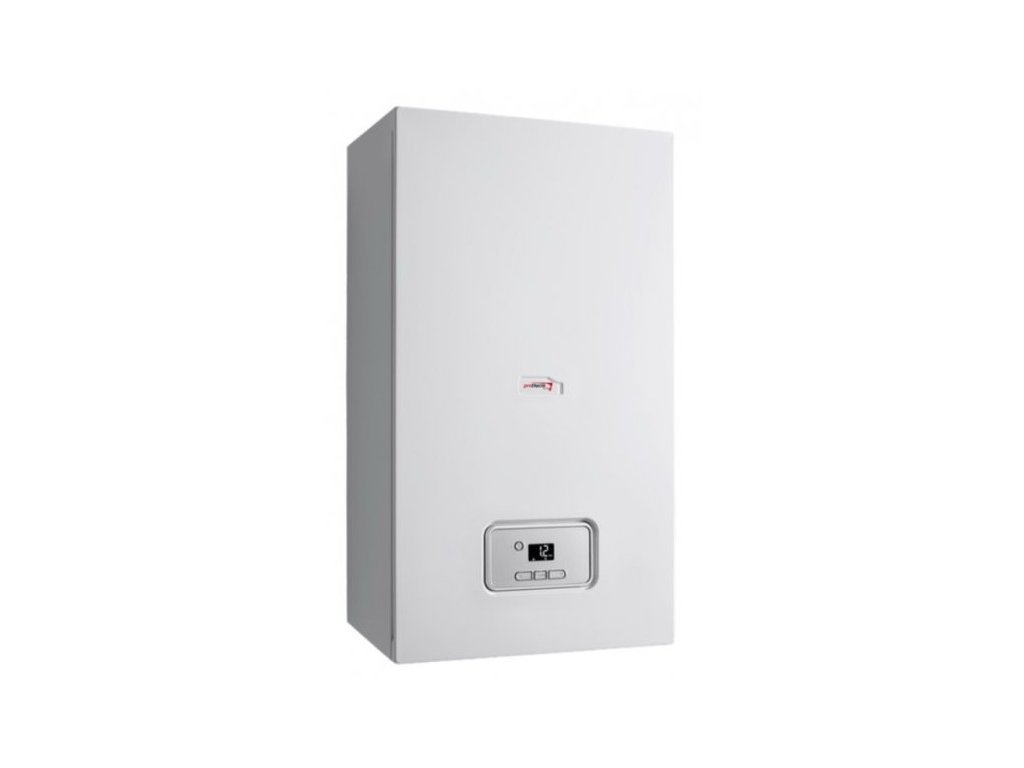
|
Protherm Gepard Condens 18/25 MKV – a condensing boiler well suited to combination with underfloor heating thanks to reliable low-temperature operation and smooth power modulation. Thanks to its wide output range (18/25 kW), it can suit both a smaller flat and a family house with a larger underfloor heating area. Price from €1,322.00. |
Key Considerations for System Design
While condensing boilers and underfloor heating can work together efficiently, the design must address several unique factors not as relevant with traditional radiators. One of the first steps is ensuring the boiler’s output is correctly sized to the home’s actual heat losses and the thermal characteristics of the underfloor system.
Accurate Output Calculation
Take the example of a home with poorly insulated floors. An oversized boiler might cause frequent cycling, while an undersized one could fail to meet heating demands in cold weather. The correct approach is to calculate the boiler’s required output based on actual heat loss values, including any losses through the floor. This involves accounting for insulation quality and floor construction. For a detailed explanation of how to calculate the required boiler output, refer to the Knowledge Center article What Boiler Output Do I Need.
Thermal Inertia of Underfloor Heating
Consider the time it takes for a room to respond to temperature changes. A radiator can adjust within tens of minutes, while a concrete floor with embedded pipes may take hours to reach a new temperature. This thermal inertia is an advantage in maintaining steady room temperatures but requires a more sophisticated control system. A basic on/off thermostat may cause the room to swing between too warm and too cold due to the delayed response time of the floor system.
Benefits of Weather Compensation
To manage the system effectively, weather compensation is highly recommended. This feature uses an outdoor sensor to adjust the heating water temperature in anticipation of temperature changes. Instead of waiting for a room to become too cold before reacting, the boiler can slightly raise the water temperature in response to a drop in outdoor conditions. This proactive approach helps maintain a stable indoor climate, minimises temperature swings, and keeps the return water as cool as possible to promote condensation and efficiency.

|
Vaillant VRT 50 – a room thermostat with weather compensation support, suitable for controlling a combined boiler + underfloor heating system. By working together with the outdoor sensor, it helps keep the heating water temperature as close as possible to what the house actually needs, and therefore the return water temperature as low as possible – exactly what a condensing boiler needs for maximum efficiency. Price from €71.64. |
For more information on setting up weather compensation and the different types of thermostats available, see the Knowledge Center article Thermostat and Weather-Compensated Boiler Control.
Choosing the Right Underfloor Heating Setup
When considering underfloor heating, there are several key factors to keep in mind to ensure your system is efficient and effective. These include the type of system (wet or dry), floor construction, suitable surface materials, pipe layout, and the correct selection of a manifold. If you're looking for a comprehensive guide covering these topics in detail, you’ll find all the necessary information and the complete product range in the Underfloor Heating section of the atria.sk catalogue.
The key difference between the two types of heat emitters.
The two common setups discussed in the article above.
Three key areas covered in the article.
Key Criteria for a Successful Installation
To get the most out of your underfloor heating system, consider the following selection criteria:
- System Type: Choose between wet (screed-based) or dry process systems depending on your building phase and thermal needs.
- Low-Temperature Operation: Ensure the system is designed to operate efficiently at low temperatures to pair well with a condensing boiler.
- Thermal Insulation: Always use insulation boards to prevent heat loss downward and ensure even heat distribution.
- Surface Material: Select floor coverings with good heat transfer properties, such as tiles or engineered wood.
- Pipe Spacing: Adjust the pipe spacing according to room size and desired heat output for optimal performance.
- Control System: Consider adding weather compensation to improve control and efficiency, especially due to the thermal mass of underfloor heating.
- Hybrid Systems: Combining underfloor heating with radiators is a practical and cost-effective option, particularly when underfloor heating is limited to a specific area like a bathroom.
Practical Advice for Installation
While underfloor heating may involve a higher initial investment than traditional radiators, the long-term energy savings from improved condensing efficiency can offset the cost. If your existing underfloor heating system is in good condition and operates at low temperatures, it can be easily connected to a condensing boiler. Always ensure the system includes a mixing unit for underfloor circuits if combined with other heating methods. For best results, plan your installation carefully and consult detailed resources in the atria.sk product range for tailored solutions.
Need Guidance When Selecting a Boiler? We’re Here to Help
If you're struggling to choose the right boiler or have a specific situation at home, reach out to us. Our team is ready to offer advice and help you make an informed decision. Every household is unique, and we understand that finding the right solution can sometimes be tricky.
Further Reading on Boiler Selection and Operation
Here are some articles that cover key topics to help you better understand boiler systems and their requirements: