
How to Choose a Condensing Boiler
What Makes Condensing Boilers More Efficient
How does a condensing boiler recover more heat than a conventional one?
A condensing boiler captures heat not only from the combustion process but also from the water vapour created when natural gas is burned. In contrast, a conventional boiler allows this vapour to escape through the flue without utilising its latent heat.
What role does the dew point play in a condensing boiler?
The condensing boiler cools the water vapour below the dew point, causing it to condense into liquid water. This condensation releases additional heat, which is then used to further warm the heating water.
What efficiency levels are typical for condensing and conventional boilers?
Condensing boilers typically achieve an efficiency of around 108% relative to the calorific value of the gas. Conventional boilers, on the other hand, operate at around 88–92% efficiency.
Simplified diagram of the condensing principle – heat from the water vapour in the flue gases isn't lost through the chimney but instead further heats the heating water.
Choosing the Right Condensing Boiler for Your Home
You need a boiler that provides enough heat for the space, supports hot water use for a family of four, and fits the available installation space. These are just a few of the real-life scenarios that highlight the three main factors to consider when choosing a condensing boiler: output, method of hot water preparation, and installation location with flue gas discharge. The brand you choose—such as Bosch, Buderus, Protherm, Vaillant, Viessmann, or Attack—comes last. All these brands offer similar reliability and longevity, with differences mostly in price, design, and service support. A detailed comparison of these brands can be found in a separate article.
Matching Output to Heating Needs
This rule of thumb—1 kW per 10 m²—applies to well-insulated homes. Older homes with poor insulation may require 30–50% more power, while modern, highly insulated buildings may need significantly less. To avoid inefficiencies caused by an oversized or undersized unit, it’s best to perform a detailed heat loss calculation. A boiler that doesn't match your home’s needs can lead to wasted energy and reduced comfort. For a step-by-step guide and an interactive calculator, see the article What Output Condensing Boiler Do I Need.
Types of Hot Water Preparation
Hot water requirements vary depending on the number of people in the household and the number of taps or showers used simultaneously. You can choose from four main types of hot water preparation systems to suit your needs. Each option balances efficiency, storage capacity, and response time differently. The best choice depends on your household’s specific usage patterns and space constraints.
|
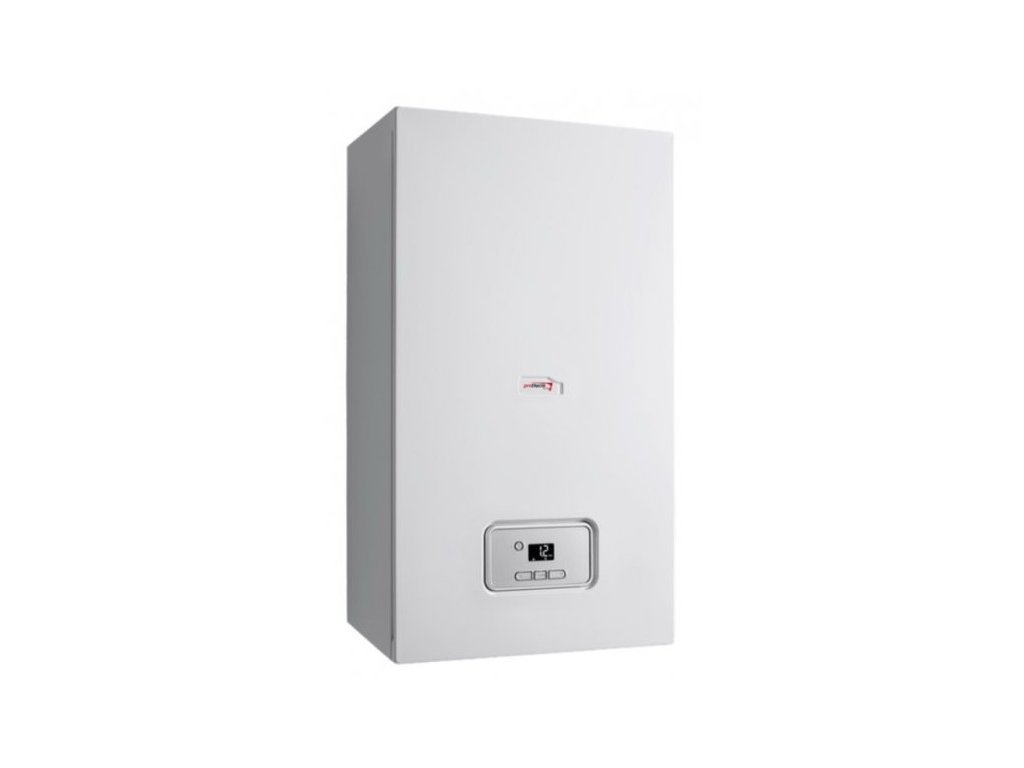
Boilers with flow-through DHW heating – no storage tank, water is heated directly on draw-off. Suitable for smaller households with a single draw-off point (e.g. a flat with one bathroom). Example: Protherm Gepard Condens 18/25 MKV, from €1,322. |

|
Boilers with a built-in storage tank – a compact solution, the tank is part of the boiler's body. Saves space, suits smaller boiler rooms. Example: Protherm Tiger Condens 30/35 KKZ 42, from €2,680. |

|
Boiler and storage tank sets – a separate, larger-volume storage tank, for higher hot water consumption (multiple bathrooms, a larger family). Example: Vaillant VU 246/5-3 ecoTEC pro + VIH Q75 B, from €2,557. |

|
Boilers with the option to connect a storage tank – a boiler without a tank that you can add at any time later. A flexible solution if you're not sure about your future consumption. Example: Protherm Gepard Condens 12 MKO, from €1,268. |
Installation Space and Flue Gas Options
When installing a boiler, the available space and flue gas system are crucial. Wall-mounted units often go in boiler rooms, kitchens, or bathrooms. Based on the combustion method, you can choose between two main types:
- Turbo (room-sealed) boilers have a sealed combustion chamber and draw air from outside, expelling flue gases through a fan. These are the most common and safest option, as they operate independently of the room's ventilation.
- Atmospheric boilers require a chimney and take combustion air from the room. This type is less common and may not be suitable for all installations.
Flue gas discharge can be either concentric—using a single pipe for both intake and exhaust—or separated, with two independent pipes. The latter is preferred when the boiler is far from the wall or when multiple units share a chimney. Additional accessories may be needed depending on the setup.

|
Protherm Splitting Element Ø 2 x 80 mm R2KP – used with a separated flue discharge system, when the air intake and exhaust need to be split into two independent routes. Price from €24. |
|
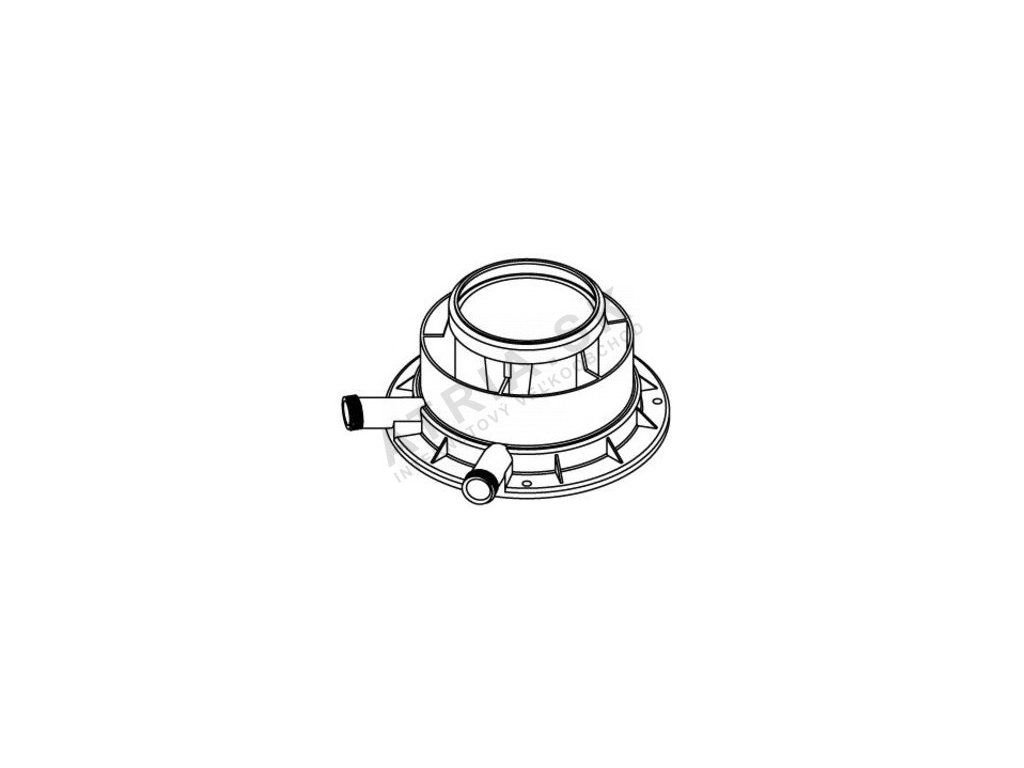
Protherm Flue Duct Adapter 60/100 mm A1KP – a reducing/transition piece between different flue duct diameters, a common part of the installation kit. Price from €18. |
Explore the full range of flue gas accessories in the flue gas discharges and flue pipes section. The final choice of discharge type and length is usually determined by the installation company, based on the boiler’s position and local regulations.
Choosing the Right Condensing Boiler: Key Considerations
When selecting a condensing boiler, consider these factors to make an informed and cost-effective decision:
- Energy source availability: Most boilers operate on mains natural gas, which is the most common and cost-effective option. If you lack a gas connection, some models can be adjusted to propane-butane (LPG) by a certified technician during commissioning.
- Control options: Add a room thermostat for better temperature regulation or a weather-compensated (equithermal) control to boost efficiency by adjusting output based on outdoor temperature.
- Storage tank integration: Choose a boiler with built-in tank if you need a consistent hot water supply. Alternatively, pair a standard boiler with a separate storage tank for a more flexible setup.
- Budget considerations: Prices vary depending on the model and configuration:
- Basic boiler with flow-through heating or tank connection option: from €1,200–1,400
- Boiler with built-in storage tank: from €2,200–2,700
- Boiler + separate storage tank set: from €2,400–2,600
- Additional costs: Installation, flue adjustments, and commissioning by an authorised service provider are essential and must be added to the boiler’s base price to ensure warranty coverage.
For more details on control systems and optimal temperature settings, refer to the guides Thermostat and Weather-Compensated Boiler Control and What Temperature to Set on a Condensing Boiler.

|
Vaillant VRT 50 – a room thermostat compatible with common condensing boilers, enabling precise temperature control in the reference room. Price from €71. You'll find the full range in the boiler controls section. |
Condensing Boilers Pay for Themselves in a Few Years
Investing in a condensing boiler is a cost-effective decision for most homeowners. These boilers are more efficient than traditional models, often reducing fuel consumption by 15–20%. The initial cost is typically recouped within a few years through lower energy bills.
The efficiency gain comes from the ability to recover heat from flue gases, which conventional boilers release unused. This not only saves money but also supports environmental sustainability by reducing emissions.
Common Questions About Condensing Boilers
- Should you invest in a condensing boiler? Yes, due to their high efficiency, these boilers are a smart long-term investment. You can expect to see noticeable savings on your energy bills within a few years.
- Do you need a heating design before purchasing? While not mandatory, having a professional calculate your home's heat loss ensures the boiler is sized correctly. This prevents issues like oversized or undersized units, which can affect performance and efficiency.
- What is the difference between turbo and atmospheric boilers? Turbo boilers use a closed combustion chamber and forced flue gas discharge through a wall or flue, while atmospheric boilers rely on a chimney and air from the room. Most modern installations use turbo models due to their efficiency and adaptability.
- Can you connect a condensing boiler to an old chimney? Yes, but the chimney must be lined with a material resistant to condensate, such as plastic or stainless steel, to ensure safe and efficient operation.
- Where does the condensate from the boiler go? The mildly acidic condensate is typically drained into the waste or sewer system using a siphon. In certain situations, a neutralisation box may be necessary to manage the pH levels.
- Are condensing boilers compatible with underfloor heating? Yes, they work exceptionally well with low-temperature systems like underfloor heating. You can read more about the integration in the article Underfloor Heating and a Condensing Boiler.
The three areas covered in detail in this article.
The four solutions covered in the chapter above.
Summary of the steps from selection to boiler start-up.
Key Considerations for Choosing a Condensing Boiler
- There are three recommended models for different household sizes
- Each model is tailored for specific heating demands and modulation ranges
- Condensing boilers offer energy efficiency through heat recovery from exhaust gases
- It is important to understand your household’s output requirements
- Common mistakes in selection and installation should be avoided
What Are the Recommended Models for Different House Sizes?
For smaller spaces like flats, typical family homes, and larger households with more demanding needs, we recommend three models that cover these scenarios. These models offer a range of outputs and modulation capabilities to match the specific heating needs of each type of property. You can browse and filter the full range of condensing boilers by output, brand, and price on our website.How Does a Condensing Boiler Achieve Higher Efficiency?
Condensing boilers work by extracting additional heat from the exhaust gases before they are vented out of the system. This is done through a secondary heat exchanger, which allows the boiler to recover more energy and convert it into usable heat. You can watch an informative video to see how this process works in detail.Source: Vaillant Slovensko, YouTube
What Common Mistakes Should Be Avoided?
Selecting and installing a condensing boiler requires attention to several key factors. Common mistakes include improper sizing, incorrect installation, and not ensuring the system is compatible with the boiler’s requirements. Reading up on these pitfalls can help you avoid unnecessary problems and ensure your boiler operates efficiently for years to come.Where Can I Find More Information?
If you’re trying to determine the right output for your boiler, understanding the comparison of different brands, or evaluating whether it’s worth replacing an old gas boiler with a condensing one, we have additional resources available. You can find these topics covered in detail through the links below.Need Help Deciding on a Boiler?
If you’re unsure about which model to choose or have a specific situation to consider, feel free to reach out to us. We’re here to help you make the best decision for your home’s heating needs.|
|
Protherm Gepard Condens 18/25 MKV – a good starting point for a flat or smaller family home, the densest service network in Slovakia. Price from €1,322.00. |
|
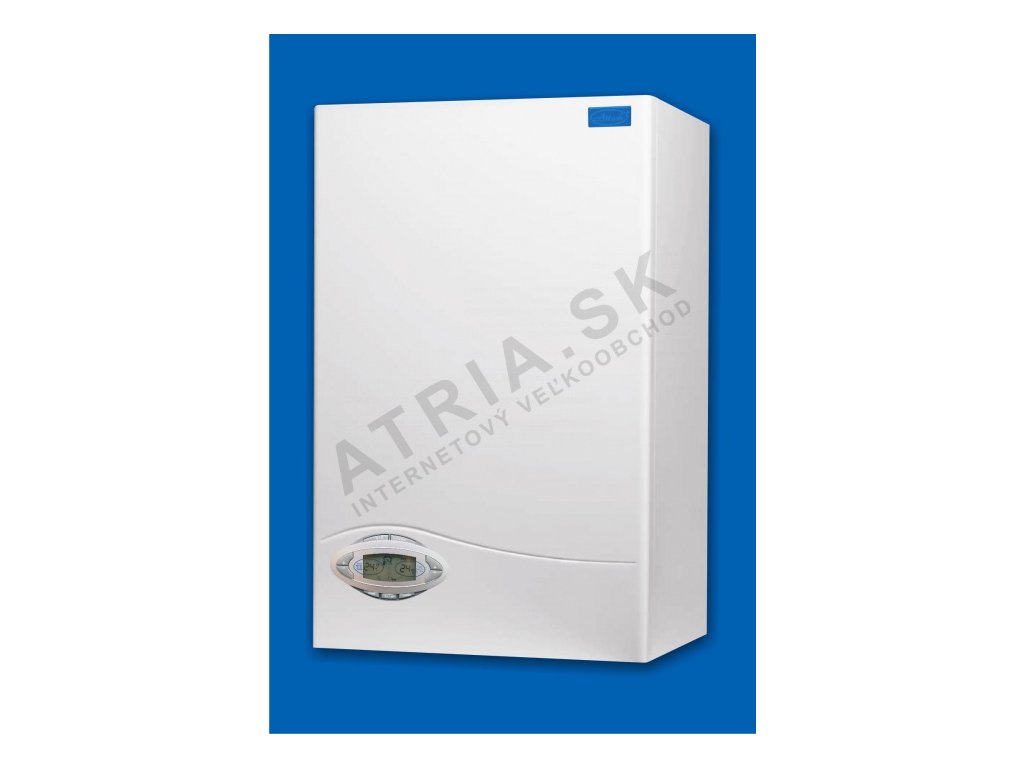
ATTACK CONDENSING 20 Premium – a Slovak manufacturer, a functional boiler without extra premium add-ons. Price from €1,731.00. |

|
Viessmann Vitodens 100-W, 3.2 – 25 kW, DHW – for a more demanding household, a wide modulation range starting from 3.2 kW. Price from €2,398.90. |
See also: browse and filter the full range of condensing boilers by output, brand and price here · What Output Condensing Boiler Do I Need · Most Common Selection and Installation Mistakes · Comparison of Condensing Boiler Brands · Is It Worth Replacing an Old Gas Boiler with a Condensing One?