
What Temperature to Set on a Condensing Boiler
Understanding the Three Temperatures on a Condensing Boiler
What is the heating water temperature and how is it used?
The heating water temperature refers to the temperature of the water that flows to your radiators or underfloor heating system. This temperature is crucial for effective space heating and must be set appropriately to ensure comfort and efficiency. The boiler manages this temperature independently of the other settings.
Why is the domestic hot water (DHW) temperature important?
The DHW temperature is the temperature of the water that you get when you turn on the hot water tap, for example during a shower. This temperature must be set correctly to prevent health risks associated with either too low or too high water temperatures. The boiler also stores this setting separately from the other two.
How does the room temperature setting work on a condensing boiler?
The room temperature is the one you typically set using a thermostat or directly on the boiler if no thermostat is installed. This setting tells the boiler what indoor temperature to maintain. It operates independently from the heating water and DHW temperatures and follows its own logic for regulating heat output.
Why do these three temperatures need to be handled separately?
Each of these temperatures serves a different purpose and follows a different logic. Confusing or missetting them can lead to unnecessary heating costs or even potential health issues with hot water. Correctly understanding and managing all three is key to efficient and safe operation of a condensing boiler.
What tools can help in setting these temperatures correctly?
There are concrete tools and practical advice that can help you set each of these temperatures accurately. These include programmable thermostats, DHW temperature controllers, and user guides specific to your boiler model. In this article, we’ll explore these tools in detail to make the process easier for you.
Understanding Heat in a Condensing Boiler
Imagine a situation where you need to heat your home and provide hot water at the same time. A condensing boiler is designed to handle this dual task, managing two distinct circuits simultaneously.
- Heating Circuit – This circuit involves water that moves between the boiler and the heating system, such as radiators or underfloor heating. The temperature of this water is known as the "flow temperature" or "heating water temperature." On most boilers, this is displayed with a radiator icon.
- DHW Circuit – This refers to the hot water used in your home, whether it is stored in a tank or heated on demand. The boiler display usually shows this temperature with a symbol of a tap or a droplet.
- Room Temperature – The air temperature in your living space is another important factor. However, the boiler does not measure this directly unless a room thermostat is used to communicate it.
When it comes to room temperature, you can typically set it based on your comfort preferences. However, for the other two temperatures, there are expert recommendations to follow. These guidelines are important not only for maximizing efficiency and saving energy but also for ensuring the health and safety of the system and its users.
Choosing the Right Heating Water Temperature for Maximum Efficiency
To make the most of your condensing boiler, you need to think differently than you would with a traditional system. The goal is to keep the heating water temperature as low as possible while still maintaining your desired comfort level. This approach allows the boiler to operate in condensing mode, which significantly boosts efficiency and reduces fuel consumption.
Condensing boilers generate extra heat by cooling flue gases until the water vapor inside them condenses into liquid. This phase change releases additional heat, which is then used to warm your home. For this process to work, the return water temperature must be below about 55 °C. The lower the temperature, the more flue gas condenses and the better the boiler performs. Setting the temperature unnecessarily high can prevent condensation from occurring and reduce the boiler’s efficiency to that of a standard non-condensing unit.
Here are key factors to consider when choosing the right temperature for your system:
What to Look For in Your Heating System
- Underfloor heating requires much lower water temperatures due to its large surface area. A range of 30 – 40 °C is typically sufficient, and even lower temperatures are often enough in modern, well-insulated buildings. This makes it one of the most efficient combinations with a condensing boiler, as it allows the boiler to operate in condensing mode most of the time.
- Radiators need higher water temperatures, usually in the range of 45 – 65 °C. The exact value depends on the size of the radiators relative to the room's heat loss and the original design temperature spread (e.g., 55/45 °C or 70/55 °C). If your radiators are oversized, you may be able to reduce the temperature below 50 °C without compromising comfort.
What to Avoid
- Setting the temperature too high "just to be safe" can prevent the boiler from operating in condensing mode, increasing gas consumption and reducing efficiency.
- Ignoring the system's design and heat output can lead to either overworking the boiler or insufficient heating, both of which affect efficiency and comfort.
When It Pays Off
- When the return water temperature stays below 55 °C, the boiler consistently produces additional heat through condensation, reducing fuel use.
- If your radiators are properly sized or oversized, you can reduce the heating water temperature without sacrificing comfort, improving efficiency and lowering running costs.
Practical advice: Always aim for the lowest heating water temperature that still maintains your desired room temperature even during the coldest weather. Regularly check and adjust the settings, especially after system modifications or insulation upgrades. For detailed guidance on underfloor heating, see Underfloor Heating and a Condensing Boiler, and for radiators-related tips, visit Radiators and a Condensing Boiler.
Use Weather Compensation for More Efficient Heating
Instead of manually setting a fixed temperature for your boiler, you should use weather compensation control. This smart system automatically adjusts the heating water temperature based on the outside climate, ensuring your home is always warm enough without wasting energy. The result is a more efficient boiler and lower energy costs over the winter months.
Outdoor temperatures vary constantly, and so does your heating system’s need for energy. On a mild day in January, for example, much less heat is required than on a freezing -15 °C night. If you keep your boiler running at a high, manually set temperature "just to be safe," you risk overheating your home unnecessarily and reducing system efficiency on days when less heat would suffice.
Weather compensation uses an outdoor sensor to continuously monitor the temperature and calculates the ideal boiler water temperature in real time. This is done using a pre-set heating curve that your system follows. With this setup, the boiler adapts on its own, eliminating the need for manual adjustments. Typically, this leads to a lower average water temperature than if you set a fixed one — a key factor in improving efficiency and reducing gas consumption.
For even better performance, pair this with a room thermostat. The thermostat tells the boiler whether the indoor temperature is comfortable or if more heating is needed. This dual control system — combining weather compensation with room temperature feedback — is the most effective and comfortable solution available for a standard condensing boiler.

|
Protherm – Outdoor temperature sensor (wired) for boilers with an eBus bus – an outdoor sensor that constantly reports the current outside temperature to the boiler. Thanks to it, the boiler calculates the required heating water temperature on its own and you don't need to manually adjust anything – instead of a single fixed value, you get a full weather compensation control system. Price from €33.54. |
For a detailed breakdown of how to set up a heating curve, the different types of controls, and installation considerations, refer to the article Thermostat and Weather Compensation Control for a Boiler.

|
Vaillant VRT 50 – a room thermostat for setting the desired room temperature and a weekly time program (for example, a lower temperature at night, higher in the morning and evening). Thanks to it, the boiler heats exactly as much as needed, rather than "blindly" following a fixed curve. Price from €71.64. |
Setting the Right Temperature for Hot Water
- The ideal temperature for domestic hot water (DHW) storage is 55 – 60 °C to prevent legionella growth.
- Keeping the temperature too high can lead to increased limescale and higher energy use.
- Hot water is mixed with cold water at the tap to reach a comfortable 38 – 40 °C.
Why is 55 – 60 °C the recommended DHW temperature?
Domestic hot water needs to be stored at a minimum of 55 – 60 °C to inhibit the growth of the legionella bacterium, which can multiply in water left standing between 20 °C and 45 °C. This poses a risk of serious illness if inhaled as an aerosol, such as in a steamy shower. Maintaining the water at 55 – 60 °C stops the bacteria from multiplying. For added safety, some systems perform a thermal disinfection cycle, briefly heating the water to around 70 °C to kill the bacteria outright.
What are the downsides of heating water too much?
Keeping DHW at a temperature higher than 60 °C has two main drawbacks. First, it increases the formation of limescale. Hotter water causes minerals like calcium and magnesium to precipitate more quickly, leading to deposits in the tank, heat exchanger, and pipes. This can reduce the system’s efficiency and require more frequent cleaning. Second, higher temperatures mean more energy is used to heat the water. Since most of this hot water is mixed with cold water at the tap to reach a comfortable 38 – 40 °C, the extra heat is essentially wasted.
How is the right temperature achieved at the point of use?
Although the water in the storage tank is kept at 55 – 60 °C, it is mixed with cold water through a mixing valve before reaching the tap. This ensures that the water delivered to your shower or sink is a comfortable 38 – 40 °C. This balance between safety and efficiency makes the 55 – 60 °C range the ideal compromise for DHW storage.
|
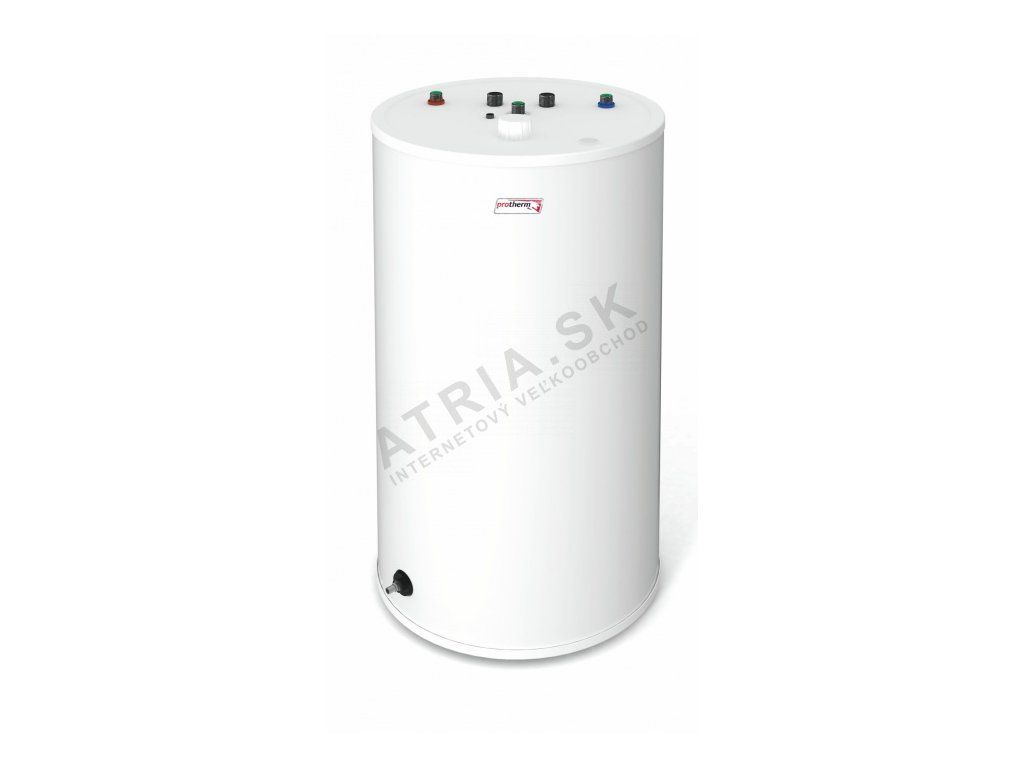
Protherm FE 200 BM – stationary storage tank – this is exactly the type of tank in which the DHW temperature is set and maintained. Larger volumes (200 liters here) have the advantage of a more stable temperature during several simultaneous draw-offs, for example in a household with several bathrooms. Price from €822.66. |
Discrepancies in Room Comfort and Heating Efficiency
Varying Comfort Needs Across Rooms
Each room in your home serves a different purpose, which means the air temperature you find comfortable also varies. For example, you might prefer a warmer setting in the living room during the day, while a cooler temperature in the bedroom supports rest and energy efficiency. These differences are not just personal preferences—they affect how your heating system operates and how much energy you use.
Energy Implications of Temperature Adjustments
Every degree you raise the room temperature has a direct impact on your energy bills. Research indicates that lowering the temperature by just 1 °C can reduce heating costs by several percentage points. This makes small adjustments a powerful tool for saving energy and money without sacrificing comfort:
- Living areas during the day: A temperature of 20 – 22 °C is typically considered comfortable and practical.
- Bedrooms: Many people find 17 – 19 °C to be ideal for rest, aligning with the body's natural cooling during sleep and reducing overall energy demand.
- Evening or unoccupied periods: Instead of turning the heating off entirely, using a setback mode—lowering the temperature by 2 – 4 °C—is more efficient. Reheating a cold home from scratch often consumes more energy than maintaining a slightly lower temperature.
Optimising Heating with Room-by-Room Control
To make the most of these insights, it's beneficial to control the temperature individually for each room rather than applying a uniform setting for the whole house. This allows you to match each space to its specific needs, enhancing comfort while reducing unnecessary energy use. You can learn more about calculating savings and optimising your system in the article Gas Consumption and Heating Savings.

|
Elektrobock EMF-1 – a programmable thermostatic radiator head that lets you set a different temperature and time program in the bedroom than in the living room, without needing to modify the heating system. Price from €20.06. |
Setting Heating and DHW Temperatures: Clear Answers to Common Concerns
Can high heating water temperature speed up room heating, and is it better to keep it low?
Yes, higher water temperatures transfer more heat faster, but for regular use, a lower setting is more efficient. It allows the boiler to operate smoothly for longer, saving gas and promoting condensation. This improves efficiency and reduces fuel costs over time.
Is it necessary to keep DHW temperature at 70 °C all the time to prevent legionella?
No, maintaining DHW at 55 – 60 °C is sufficient to prevent legionella. Keeping it permanently at 70 °C increases limescale and energy use. A higher temperature is only needed briefly for thermal disinfection of the tank.
Why might a boiler struggle to keep the house warm during severe cold?
If the heating water temperature or curve is set too low for extreme weather, the boiler may not generate enough heat for the house. This can be due to small radiators or high heat loss. Adjusting the curve for low temperatures or reviewing radiator size can help, as explained in Radiators and a Condensing Boiler.
Can heating water and DHW temperatures be adjusted separately?
Yes, the two systems are independent. The boiler’s display or app lets you adjust each temperature without affecting the other, allowing tailored settings for comfort and efficiency.
What is the benefit of using a room thermostat and outdoor sensor?
These sensors allow the boiler to automatically adjust the heating water temperature based on the weather. Without them, you'd have to guess the right temperature manually, often keeping it unnecessarily high. Weather compensation control helps reduce energy use while maintaining comfort.
| Parameter | Recommended range | Note |
|---|---|---|
| Heating water – underfloor heating | 30 – 40 °C | Lower temperature = higher condensation efficiency |
| Heating water – radiators | 45 – 65 °C | Exact value depends on frost level and radiator sizing |
| Domestic hot water (DHW) in the tank | 55 – 60 °C | Prevents legionella growth, compromise with limescale |
| Room temperature – living areas (day) | 20 – 22 °C | Typical comfort recommendation |
| Room temperature – bedroom / night | 17 – 19 °C | Setback instead of switching heating off completely |
Exploring Practical Applications for Heating Systems
Consider a home where underfloor heating is paired with a condensing boiler. This combination offers improved efficiency due to the lower water temperatures required by the underfloor system, which aligns well with the condensing boiler's optimal performance range. Such an example highlights the importance of matching heating components to maximize energy use.
Another scenario involves the use of a thermostat with weather compensation control for a boiler. This setup allows the system to adjust the heating output based on external temperature, ensuring comfort while reducing fuel consumption. The benefits of this approach are particularly evident in variable weather conditions, where precise control helps avoid unnecessary energy use.
When it comes to radiators and a condensing boiler, the design and placement of the radiators play a critical role in achieving efficiency. Larger radiators with greater surface area help in lowering the water temperature required for effective heat distribution, thus supporting the condensing mode of the boiler.
Understanding gas consumption and heating savings is essential for homeowners looking to reduce energy bills. By selecting the right equipment and optimizing system settings, it's possible to achieve significant savings without compromising on comfort.
See also: Thermostat and Weather Compensation Control for a Boiler · Underfloor Heating and a Condensing Boiler · Radiators and a Condensing Boiler · Gas Consumption and Heating Savings