
Bathroom taps: a complete guide to selection, installation and the trends of 2026
Today the bathroom is far more than just a room for washing. It is a space for relaxing and recovering after a demanding day, and often a place where family or friends cross paths. At the heart of every such space is a fitting that has a key influence not only on function but also on the overall design and atmosphere of the bathroom – the tap. Choosing the right tap is a decision that lasts for years, if not decades. The wrong choice can show itself as an annoying leak, awkward operation, a finish that wears quickly or even damage caused by seepage.
In 2026 the market for bathroom fittings has changed. Energy prices, which affect the production of metals (copper and brass in particular), together with a growing emphasis on sustainability and saving water, have brought new demands on how taps are built. It is no longer enough to choose a tap by colour or price. You have to consider the technical specifications, the type of ceramic discs, the quality of the finish, the ergonomic design and, of course, compatibility with your existing pipework. This article was written to give you a comprehensive overview of everything you need to know before you buy, from the technical side to the aesthetic details that are often overlooked.
Our aim is simple: to take you through the selection process step by step, explain the technical terminology in plain language and show you specific examples of products that meet the highest standards. At ATRIA we realise that although there are hundreds of options on the market, the information is often fragmented or too technical. That is why we have put together this detailed guide to help you make an investment that pays you back in a long service life and trouble-free use.
Why is choosing a tap a critical moment in a bathroom renovation?
When planning a bathroom renovation, many people focus on wall tiles, floor tiles, baths and shower enclosures. Taps are often regarded as "add-on" fittings to be bought later or picked according to whatever is on offer in the shop at the time. That is a fundamental mistake. Taps are mechanically demanding fittings that work under pressure and with a constant flow of water. Their quality has a direct effect on how comfortable the whole bathroom is to use.
Picture the situation: after ten years of use your tap starts to drip. It is not just an irritating noise but also wasted water which, at today's prices for water supply and sewerage, quickly turns into a financial loss. Worse still is an internal chamber cracking because of poor-quality material, which can flood the whole bathroom and mean repairs to the floor and to adjoining ceilings. A quality tap is therefore insurance against expensive repairs.
Besides safety and cost, ergonomics also plays a part. Modern taps are designed to be easy to operate with one hand, to minimise wasted water while you set the temperature and to resist fingerprints and limescale. The design of the tap also defines the style of the whole bathroom. It can be minimalist, industrial, classic or luxurious. Choose the wrong type and you may upset the visual harmony of a space you have designed with such care.
In 2026 economy is an important factor too. New regulatory standards and the drive to cut water and energy consumption are pushing manufacturers to innovate. Taps with aerators, high-precision thermostatic taps and flow-control systems are now standard, not a luxury. Choosing the right tap is therefore also an active contribution to your household's environmental responsibility.
Types of tap: what exactly are you looking for?
Because the term "tap" is very general, the first step is to identify the type of tap you need. A bathroom has several zones, and there are specific solutions for each of them. Confusing these types may mean you have to return the tap or find that it cannot be fitted properly.
Sink (basin) taps
This is the most common type of tap, the one you find above the basin. Its main job is to supply water for washing your hands and face and brushing your teeth. They fall into several subgroups:
- Deck-mounted taps: These are fitted directly onto the basin or the worktop around it. They have a tall neck (spout) that rises above the basin. They are ideal for larger basins and leave plenty of room for washing your hands.
- Wall-mounted taps: These are fitted directly into the wall, with the water flowing from a spout that projects from it. They are very elegant and save space on the basin, but the pipework has to be positioned precisely during construction or renovation.
- Bidet taps: A specialised type that is often lower and has a shorter spout so that the water lands precisely in the bidet. Some models have an integrated cleaning spray.
One example of a reliable deck-mounted tap is the LOOP deck-mounted sink mixer tap. Its design is modern and functional, and it suits ordinary households that value easy maintenance and solid construction.
Bath taps
Bath taps are used to fill the bath. They are usually more robust and have a larger outlet diameter so that the bath fills as quickly as possible. They are divided into:
- Wall-mounted taps: Fitted to the wall and often combined with a shower head and a hand shower on a hose.
- Floor-standing (freestanding) taps: Fitted to the floor and rising above the rim of the bath. They are a luxury feature that creates a dramatic effect, but they need space and a special installation.
- Taps without accessories: This is a tap on its own, fitted to the rim of the bath or to the wall; if you want to be able to shower, the shower head and hose have to be fitted separately.
For those who prefer simple installation and a modern look, the ARKO bath mixer tap without accessories in a satin finish is an excellent choice. Its matt surface resists fingerprints and unsightly scratches, a common problem with glossy finishes.
Shower mixer taps
Shower mixer taps are designed specifically for showering. They are usually wall-mounted and connect to a shower head and a hand shower. There are two main categories:
- Thermostatic shower mixer taps: These let you set an exact water temperature, which is then maintained automatically even if the cold or hot water pressure in the system changes. This is the absolute standard for the safety of children and older people.
- Monobloc (single-lever) shower mixer taps: These are operated by a single lever that controls both flow and temperature. They are quick to use but less precise than thermostatic models.
For maximum comfort and safety we recommend the ARKO shower mixer tap without accessories in a satin finish, which is designed to combine easily with a variety of shower heads and systems.
Bidet taps
Bidet taps are often underrated, yet they are essential for getting full use out of a bidet. They are smaller, have a shorter spout and often come with a special waste set. What matters is that they deliver enough flow to rinse the bidet and, at the same time, a jet gentle enough for personal hygiene.
In our range you will find quality solutions such as the ARKO bidet mixer tap with waste set in a chrome finish, which offers reliability and an elegant look.
The technical side: how does a tap work and what should you look out for?
Look under the bonnet of a tap and you will find intricate mechanisms that have to work smoothly even after thousands of opening and closing cycles. Understanding the basic technical principles will help you judge the quality of the product you are buying.
Ceramic discs: the heart of every tap
Today it is almost impossible to find a quality tap with rubber washers or old-style valves. Ceramic discs are the standard. These discs are made of aluminium oxide (a ceramic), which is extremely hard and wear-resistant. When you turn the lever, the discs move so that the opening between them is fully closed, fully open or anywhere in between to regulate the flow.
Why are ceramic discs so important? Because they are practically indestructible in normal use. Unlike rubber sealing rings, which dry out, crack or deform over time, ceramic discs keep their shape for decades. If you have a tap with ceramic discs, you can expect it to start dripping only after decades of intensive use, not after a few years.
How ceramic discs work: when the lever is turned, the upper disc moves so that the openings are either covered (closed) or uncovered (open). The ceramic keeps the seal tight even after thousands of cycles.
Tap body materials
The body of a tap can be made from various materials, each with its own advantages and disadvantages:
- Brass: The most common and most reliable material. Brass is corrosion-resistant, conducts heat well and is strong. Quality taps are made of brass with a copper content of at least 60 %, which guarantees a long service life. Cheaper taps may be made of zinc alloys (die-cast), which are less resistant to corrosion and can disintegrate over time.
- Stainless steel: Highly resistant to corrosion and mechanical damage. It is often used in industrial or public washrooms but is gradually finding its way into homes as well. It needs a special surface finish to look attractive.
- Plastic: Used only in cheap models. It is less durable and can deform at higher temperatures. Plastic tap bodies are best avoided if you are looking for a long-term solution.
Always make sure the tap has a brass body. If the price is too low, it is probably a cheaper alloy that may not last for many years.
Venting and water pressure
Taps are designed for particular ranges of water pressure. Ordinary domestic pipework has a pressure of between 0.5 and 6 bar. If the pressure is too high, the tap may be damaged or dangerous pressure surges (water hammer) may occur. If the pressure is too low, the tap may not work properly (for example, it may not be possible to set the temperature).
Modern taps are fitted with systems that dampen water hammer and with aerators that mix air into the water. This means that even at low pressure the flow will be strong and steady, which makes the tap more comfortable to use and saves water. An aerator is a small mesh insert at the end of the spout that breaks the water up into fine droplets. As well as saving water, it improves the feel of the running water, which is softer and splashes less.
Finishes: from polished chrome to luxurious satin
Choosing the finish of a tap is one of the most important aesthetic decisions. The finish affects not only the look but also maintenance and resistance to damage. In 2026 trends have shifted from pure polished chrome towards matt and textured finishes, which are more resistant to fingerprints and limescale.
Chrome (polished)
Chrome is the traditional standard. It is a thin layer of chromium applied to brass by electroplating. It has a high gloss that gives the bathroom a clean, hygienic look. However, it is prone to fingerprints and water marks, which show up clearly on a glossy surface. It needs regular wiping to keep its appearance.
If you prefer the classic polished look, the ARKO bidet mixer tap with waste set in chrome is an excellent choice. Its finish resists corrosion and chemical cleaning agents, provided they are used correctly.
Satin (matt chrome)
The satin finish is very popular today. It is in fact chrome that is further treated after electroplating to give it a matt, silky appearance. The advantage of a satin finish is that fingerprints and water marks are far less visible on it. It is also more resistant to scratches and to the micro-scratches that show up immediately on polished chrome.
For those who want a modern, practical look we recommend the ARKO deck-mounted sink mixer tap in satin. Its matt finish is ideal for family bathrooms where low maintenance and high durability are needed.
Black (PVD)
Black taps have been a big hit in recent years. The finish is applied by PVD (Physical Vapor Deposition), which creates a very thin and durable layer. Black gives the bathroom a luxurious, dramatic look. However, black can be more demanding to maintain, because water marks and mineral deposits show up on it. It needs regular wiping with a soft cloth.
Gold and copper
Gold and copper taps are a symbol of luxury. Here too PVD technology is used to make the finish durable. These colours suit Art Deco bathrooms or anyone who wants to create a striking accent. They do, however, need special care and cleaning products that are compatible with these finishes.
Ergonomics and design: how to choose a tap that suits your bathroom
Tap design is not just about looking good. It is about how the tap handles and how it fits into your space. Poor ergonomics can cause annoyances such as splashing, awkward operation or water that does not reach far enough into the basin.
Spout height and shape
The height of the spout is a critical factor. For basin taps, the spout should be high enough for you to wash your hands and face in the basin comfortably. If the spout is too low, water will splash out of the basin. If it is too high, the lever may be awkward to operate and the water falls from too great a height, which causes splashing.
The width and shape of the spout also affect the flow. A wider spout allows a higher flow rate, which is good for filling a bath quickly but can be uncomfortable for washing your hands. A narrower spout produces a gentler stream that is well suited to washing your hands and face.
Controls
A tap's controls vary by type. Monobloc taps have a single lever that controls flow and temperature. They are quick to use but less precise. Two-handle taps have two knobs or levers that control hot and cold water separately. They are more precise but slower to use.
Thermostatic taps have one or two controls for setting temperature and flow. They are the safest and most convenient, because they let you set an exact temperature that is then maintained automatically. They are ideal for families with children or for older people.

A close-up of the ARKO deck-mounted sink mixer tap in satin, showing its ergonomic design and durable finish.
Style trends for 2026
In 2026 the following styles dominate in bathrooms:
- Minimalism: Clean lines, concealed installation, no unnecessary decoration. Taps are designed to blend visually into their surroundings.
- Industrial style: Exposed pipework, dark colours, raw materials. Taps in this style often look robust and are made of stainless steel or brass with a matt finish.
- Luxury style: Gold and copper finishes, decorative elements, luxurious materials. Taps in this style are often large and have a bold design.
- Eco style: Natural materials, recycled metals, resource-saving technology. Taps in this style are designed to save water and energy.
Installation and fitting: what you need to know before you start
Installing a tap is a job that calls for precision and an understanding of the technical specifications. Incorrect installation can lead to leaks, damage to the tap or failure of the whole system. Before you begin, always read the installation instructions and check that you have all the tools and materials you need.
Preparing the installation site
Before fitting the tap you need to prepare the site. Make sure the pipework is correctly positioned and that the distance between the water inlets is right. For basin taps the standard spacing is 15 cm, but other variants exist. For bath and shower taps the spacing is usually standardised, but you should check the specifications of the particular model.
The next step is to check the water pressure. If the pressure is too high, a water hammer arrester may need to be fitted. If it is too low, a pump may be required. Also check that you have enough room to install the tap and its controls.
Installation procedure
Installing a tap usually involves the following steps:
- Turning off the water: Always turn off the water supply to the bathroom first. Close the main stopcock.
- Removing the old fitting: If necessary, remove the old tap and clean the installation site.
- Fitting the new tap: Position the tap and fix it in place according to the instructions. Make sure the seals are seated correctly and the tap is firmly secured.
- Connecting the pipework: Connect the tap to the supply pipes. Use good-quality seals and connectors. Make sure the joints are watertight.
- Checking for leaks: Once connected, turn the water on and check for leaks. If there are any, tighten the joints or replace the seals.
- Testing: Test the tap at various temperature and flow settings. Make sure it works properly.
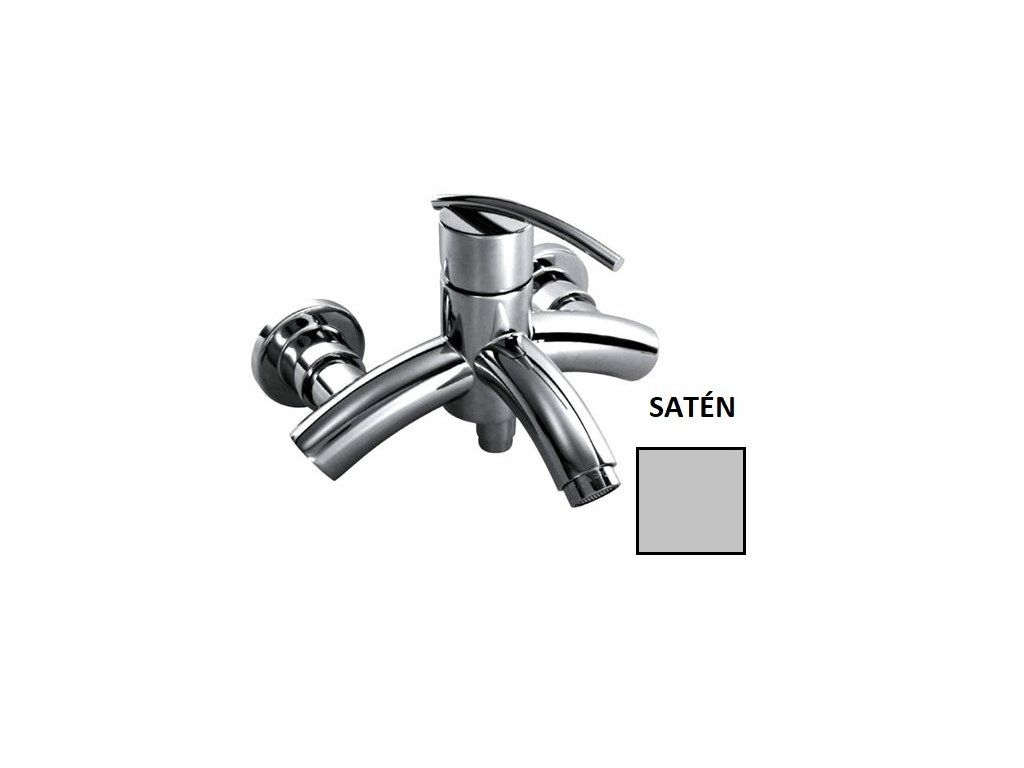
The complete ARKO shower mixer tap set in satin, which includes all the components needed for installation and use.
When should you call a professional?
If you have no experience of fitting taps, or if the installation is complicated (for example with wall-mounted taps or thermostatic systems), we recommend contacting a professional. Incorrect installation can cause serious damage and increase the risk of leaks. A professional installer will guarantee correct installation and safe use.
Maintenance and care: how to extend the life of your tap
Looking after your tap is important for a long service life and for keeping it looking good. Poor maintenance can lead to corrosion, deposits and damage to the finish. The following tips will help you keep your tap in perfect condition.
Routine maintenance
For routine maintenance it is enough to wipe the tap regularly with a soft cloth. Avoid abrasive cleaners, which can damage the finish. To remove limescale, use a dedicated limescale remover or a solution of vinegar and water. Do not use strong acids, which can damage the surface of the tap.
Maintaining ceramic discs
Ceramic discs are durable, but they can become clogged with dirt. If the tap starts to drip or becomes stiff to operate, the ceramic discs may need replacing. This is a simple job you can do yourself if you have the spare parts and the disassembly instructions.
Caring for finishes
Different finishes need different care. Polished chrome needs frequent wiping to prevent water marks. A satin finish is more resistant but still needs regular care. Black and gold finishes need special cleaning products that are compatible with them.

An overall view of the ARKO deck-mounted sink mixer tap in satin, ideal for modern bathrooms with an emphasis on practicality.
Prices and budget: how much does a quality tap cost in 2026?
The price of a tap varies by type, material, finish and brand. In 2026 prices span a wide range, from a few tens of euros for cheap models to hundreds of euros for luxury and specialist taps. It is worth remembering that a cheap tap can end up costing more if it has to be replaced or repaired more often.
Factors affecting the price
- Material: Brass taps cost more than those made of zinc alloys. Stainless steel taps are more expensive still.
- Finish: Standard finishes (chrome, satin) are cheaper than special finishes (black, gold, copper).
- Technology: Thermostatic taps cost more than monobloc taps. Taps with aerators and water-saving systems are also more expensive.
- Brand: Branded taps cost more than unknown makes, but they offer better quality and a better warranty.
Price examples
For a standard basin tap with ceramic discs and a satin finish you can expect a price of between 30 and 80 euros. Bath and shower taps range from 50 to 150 euros. Thermostatic taps and special finishes can cost from 100 to 300 euros or more.
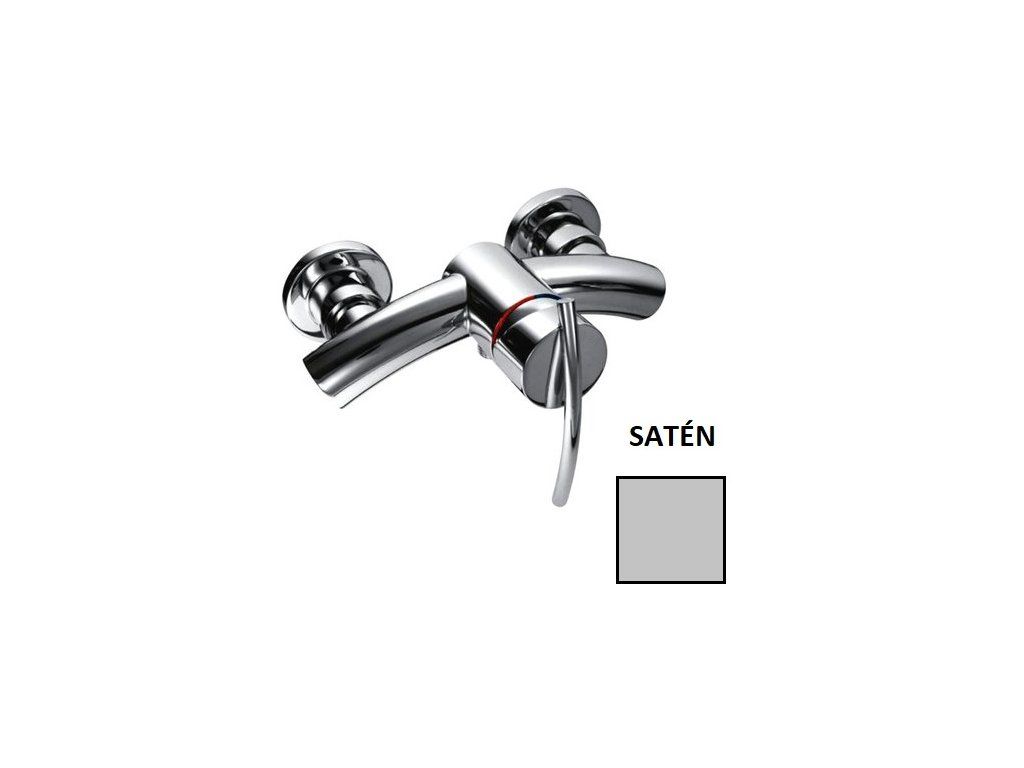
The ARKO bidet mixer tap in satin, designed for optimum performance and an elegant look in a small bathroom.
Legislation and environmental aspects
In 2026 legislation on saving water and energy has become stricter. Taps must meet certain standards before they can be sold on the market. These standards cover water flow rate, pressure and efficiency. Taps that fail to meet them cannot be sold.
Environmental aspects matter too. Taps should be designed to save water and energy. That means they should have aerators, thermostats and other systems for regulating flow and temperature. These systems help reduce water and energy consumption, which benefits both the environment and your wallet.
Frequently asked questions (FAQ)
1. How long does a quality tap last?
A quality tap with ceramic discs and a brass body should last 10 to 15 years or even longer if it is properly maintained. Cheap taps with rubber washers may last only 3 to 5 years.
2. Why is my tap dripping?
A dripping tap is usually caused by worn ceramic discs, a damaged seal or mineral deposits. If the tap is old, the ceramic discs or the whole tap body may need replacing.
3. How do I remove limescale from a tap?
Limescale can be removed with a dedicated limescale remover or a solution of vinegar and water. Do not apply strong acids, which can damage the surface of the tap. After cleaning, rinse the tap thoroughly and wipe it dry.
4. Can I use the same tap for a basin and a bidet?
Although some taps can be used for both purposes, it is better to use specialised ones. Bidet taps have a shorter spout and are designed for lower water pressure. Using a basin tap on a bidet can result in an unsuitable flow of water.
5. How do I choose a tap for a small bathroom?
Wall-mounted taps or taps with a compact design are ideal for a small bathroom. Wall-mounted taps save space on the basin and create a clean look. Compact taps are smaller and suit confined spaces.
6. Is it better to buy a thermostatic tap?
Yes, thermostatic taps are safer and more convenient. They let you set an exact temperature that is maintained automatically even if the water pressure changes. They are ideal for families with children or for older people.
Conclusion: an investment in quality that pays off
Choosing a bathroom tap is a decision that will affect your everyday use of the bathroom for many years. It is not just a question of price or design, but also of the quality of the materials, the technology and the ergonomics. In 2026 it is important to consider not only looks but also economy and safety.
We hope this article has given you a clearer idea of what to look for when choosing a tap. Remember that a quality tap is an investment that pays off. It saves you money on repairs, adds comfort and contributes to environmental sustainability. Do not hesitate to contact our specialists at ATRIA, who will be happy to help you choose the right tap for your needs.
Remember that correct installation and maintenance are key to a long service life for your tap. Follow our advice and your bathroom will always look and work like new. Choose a tap that will serve you for years and be a pleasure to use every time.
Do you have a question about this topic?
Can't decide, or dealing with a specific situation in your home? Write to us - we will be happy to advise.