
Electric towel radiators: how they work and where they pay off
Towel radiators (sometimes also called bathroom radiators, ladder radiators or heated towel rails) are now part of the standard equipment of a modern bathroom. Until recently, this type of radiator had to be connected to the home's central heating system, but over the past decade purely electric versions have clearly been gaining in popularity. In 2026, with more and more households asking how to heat efficiently and cheaply only those rooms that really need warmth, the electric towel radiator is becoming an almost automatic part of bathroom refurbishments as well as low-energy new builds. In this article we take a detailed look at how electric towel radiators work, which types exist, when they pay off, what they really cost to run and what to watch out for when choosing and installing one.
What an electric towel radiator is and why you are reading about it right now
An electric towel radiator is a ladder-shaped heat emitter which, instead of being connected to a boiler, heat pump or central heat distribution, works entirely on its own – it generates heat with its own electric heating element fitted inside the radiator. You simply plug it into an ordinary socket (or, in some versions, hard-wire it to the mains) and the radiator starts heating the room and drying towels, regardless of whether it is the heating season or not.
Demand for this solution has grown markedly in recent years, for several reasons at once. Firstly, energy prices have settled since 2022 at a much higher level than before the energy crisis, and households are increasingly looking at how to heat efficiently and in a targeted way – only where and when it is really needed. Secondly, many households switch the boiler off completely in summer, yet the bathroom then lacks the warmth needed to dry towels and drive out moisture, which leads to mould. Thirdly, an electric towel radiator is the only solution that makes sense in cottages, apartments and holiday properties without central heating, where it would be pointless to build a complete wet system for the sake of one bathroom radiator.
How an electric towel radiator works – the principle in brief
The operating principle is fairly simple, but it involves several important technical details that determine the quality and service life of the radiator. Inside the radiator's tube system (most often made of steel or stainless steel) there is a sealed fluid – usually a special oil or a mixture of water and antifreeze. This fluid does not circulate between a boiler and the radiator as in conventional central heating, but stays permanently sealed inside the radiator.
An electric heating element (a so-called heating cartridge) is built into the bottom of the radiator and heats this fluid once connected to the mains. The heated fluid rises by natural convection through the individual rails of the ladder and warms them evenly; the heat then radiates into the room and at the same time warms the towels or textiles hung on it. The whole system is hermetically sealed, so nothing needs topping up or bleeding – as far as the fluid inside is concerned, it is a maintenance-free solution.
Temperature control is provided by a thermostatic head or an electronic controller built directly into the body of the heating element. Better models allow you to set a precise temperature, programme operating times (for example switching on automatically in the morning and evening) or even control the unit via wifi and a mobile app. Electronic control is one of the main benefits of electric towel radiators over conventional wet radiators – with a wet system, control is usually only at the level of the whole circuit or a thermostatic head on the valve, whereas an electric radiator is a self-contained unit with its own precise control.
Three types of towel radiator – electric, wet and dual fuel
When choosing a towel radiator, you will come across three basic concepts in practice. It is important to tell them apart, because they differ fundamentally in how they are connected and how they can be used:
Wet (hydronic) towel radiator
The classic solution connected to the home's central heating system – a boiler, heat pump or district heating. The heat transfer medium is heating water, which circulates between the boiler and the radiator through the pipework. The advantage is that the radiator works automatically whenever the heating system is running; the disadvantage is that outside the heating season (when the boiler is off) the radiator gives no heat at all, which is a problem in a bathroom in particular.
Purely electric towel radiator
The radiator works independently of the boiler, generating its own heat with an electric heating element. Ideal where running pipework is impossible or impractical, or where you want the bathroom heated independently of the rest of the house, for instance in summer too.
Dual fuel towel radiator
This is a compromise solution with an internal circuit connected to the home's wet system, supplemented by an electric heating element that can be switched on separately outside the heating season. It is very popular in practice precisely because in winter it runs cheaply off the central heat source, while in summer it can be heated electrically just to dry towels, without having to fire up the whole boiler.
| Radiator type | Heat source | Works out of season | Suitable for |
|---|---|---|---|
| Wet | Boiler / heat pump / district heating | No | Houses with central heating |
| Electric | Its own heating element | Yes, all year round | Cottages, apartments, flats without central heating, extensions |
| Dual fuel | Boiler + electric element | Yes, switchable | Houses with central heating where you want summer towel drying |
Where an electric towel radiator pays off most
Not every bathroom or room needs a purely electric solution – in many cases a dual fuel radiator connected to the existing wet circuit is the more logical choice. There are, however, a whole range of specific situations where the electric version is clearly the best, or indeed the only realistic, option.
Cottages, cabins and holiday properties
In a property used only occasionally at weekends, there is no point in keeping the whole heating system running just for one bathroom. An electric towel radiator can be switched on remotely before you arrive (for example via the wifi modules of some models), quickly takes the chill off the bathroom, and is simply switched off when you leave. There are no boilers to deal with, no antifreeze in a wet circuit and no risk of pipes freezing during the winter months when the property is empty.
Flats and apartment blocks where the bathroom cannot be connected to the central heating
In many older apartment blocks the central heating pipework is laid out in such a way that it cannot be brought into the bathroom, or doing so would mean costly work on the service core. In that case an electric radiator solves the problem without any demolition – all you need is a socket or a supply point close to the radiator.
Summer operation in family homes
Even households with good central heating increasingly want to dry towels and keep the bathroom aired outside the heating season. While in winter a dual fuel radiator connected to the boiler is perfectly adequate, in summer it pays to top up electrically for just a few dozen minutes a day, which is cheaper and more practical than firing up the whole boiler.
Extensions, loft conversions and new builds with spot heating
In new builds that use underfloor heating as the main heat source, for example, the bathroom is sometimes given separate top-up heating, because the underfloor heating may not be enough to warm the room quickly after a shower. Here the electric towel radiator acts as a supplementary, fast-responding heat source.
Refurbishments without disturbing floors or walls
If you are planning a bathroom refurbishment and do not want to take up the floor for new pipework, an electric radiator can simply be fixed to the wall and connected to the existing electrical circuit, saving you considerable demolition and plumbing costs.
Technical parameters to watch when choosing
When choosing a specific electric towel radiator, it is important to look at several key parameters that determine whether the unit will work reliably and efficiently in the room in question.
Heat output and power input
The output of the heating element in ordinary domestic models is typically between 300 and 900 W, and higher still for larger radiators intended for bathrooms with a bigger floor area. As a rule of thumb, around 500 – 600 W is enough to keep an ordinary bathroom of 4 to 6 m² comfortably warm; for larger rooms or poorly insulated buildings you need to allow for a higher output, or a combination with another heat source.
Dimensions and shape of the radiator
Towel radiators are made in various heights (from about 60 cm up to 180 cm) and widths (typically 40 – 60 cm), and the choice depends on the bathroom layout and the area of free wall. Narrower, taller models suit small bathrooms where wall space is at a premium, while wider models offer more room to hang several towels at once.
IP rating and safety in wet areas
As this is an electrical appliance located in a very humid environment, the IP (Ingress Protection) rating is a key parameter. Heating elements intended for bathrooms must be rated at least IPX4, which means protection against water splashing from all directions. In practice it is worth choosing a higher rating if the radiator is located right next to a shower enclosure or bath.
Control and smart functions
Modern heating elements offer a wide range of control functions – from a simple mechanical thermostat with a rotary dial, through electronic control with a display, to wifi modules that allow control via a mobile app, weekly programmes and remote switch-on before you get home.
Running costs – what an electric towel radiator really costs
This is the topic that interests most buyers the most, so it deserves a specific answer with figures. With an electricity price of around 0,17 – 0,20 €/kWh (a typical household tariff in 2026 including distribution charges), we can do a simple calculation.
Let us assume a towel radiator with a 500 W heating element that runs for an average of 3 hours a day (a typical bathroom pattern – morning and evening use plus towel drying). Daily consumption is then 1,5 kWh, which at 0,18 €/kWh means a cost of roughly 0,27 € per day. Over a month (30 days) that is about 8,10 €, and over a whole year of year-round use about 97 €.
With more intensive use, for example in a household with children where the bathroom is used several times a day and the radiator runs for an average of 5 hours a day at 600 W, consumption comes to 3 kWh a day, which is a cost of roughly 0,54 € per day, i.e. around 16,2 € a month and about 195 € a year with year-round use.
| Scenario | Output | Daily running time | Cost/day | Cost/month | Cost/year |
|---|---|---|---|---|---|
| Economy mode (weekend cottage) | 400 W | 2 h | 0,14 € | 4,3 € | – |
| Typical household | 500 W | 3 h | 0,27 € | 8,1 € | 97 € |
| Intensive use (family) | 600 W | 5 h | 0,54 € | 16,2 € | 195 € |
The calculation shows that these are fairly small sums compared with heating the whole house, but bear in mind that an electric radiator does not normally replace the main heating system – its job is to maintain a pleasant temperature and a dry environment in a bathroom where nobody spends long periods for most of the day. That is exactly why it is most economical to run it with a programmable thermostat that switches the radiator on only when it is actually needed (morning, evening) rather than continuously.
Electric versus wet radiator – which is the better value
There is no single answer to the question of whether a purely electric radiator or a connection to the central system is better value – it depends on the specific situation. If the house is heated by a cheap heat source (for example a heat pump with a high COP or district heating on a favourable tariff), it may be cheaper in the winter months to leave the bathroom on the wet circuit, because heat from a heat pump can cost less than direct electricity fed into a heating element. Conversely, if the house is heated by a gas boiler and the gas price is currently unfavourable, or if you only need heat for a short time when the rest of the house is not being heated, the purely electric solution is clearly more efficient, because you do not have to start up the whole system for one radiator.
It is for precisely this reason that dual fuel radiators are becoming more and more common in practice: they give the owner a choice according to the situation – use the cheaper central source in winter and switch to the electric element in summer or whenever the heating is off.
How an electric towel radiator is installed
In terms of building work, installing a purely electric towel radiator is considerably simpler than installing a wet version, as there is no need to run pipework, connect to a circuit, carry out pressure tests or bleed the system. Even so, several important steps must be followed.
1. Choosing the location and fixing system
The radiator is fixed to the wall using the brackets supplied by the manufacturer; you must choose a load-bearing wall or use suitable plasterboard fixings. The recommended height of the bottom edge above the floor is usually around 15 – 25 cm, and the exact dimensions are always given in the installation instructions for the specific model.
2. Electrical connection
The heating element is connected either to a conventional socket (it must be a socket protected by a residual current device and located outside the so-called protection zones around the bath and shower in accordance with standard STN 33 2000-7-701), or hard-wired via a terminal block directly into the fixed wiring, which is the safer solution and is recommended particularly in rooms with higher humidity. The position of the socket or outlet needs to be decided at the wiring preparation stage, before the bathroom is tiled.
3. Checking the IP rating and protection zones
The standard divides the bathroom into protection zones (0, 1, 2) according to the distance from the bath or shower enclosure, and different requirements for the IP rating of electrical equipment apply in each zone. A heating element rated IPX4 or higher is suitable for zone 2 as well, but the specific location must always be decided in line with the applicable standard and, if in doubt, discussed with an electrician.
4. Commissioning
Once the radiator is hung and connected, you simply set the desired temperature on the thermostat or programme the timer – no bleeding or filling of the system is required, as it is a sealed system filled by the manufacturer.
Specific models and what they are suited to
On the market you will find electric towel radiators in two basic shapes – straight (type S) and curved (type U) – with both types available in white or chrome, so you can match the radiator to the overall design of your bathroom.

Electric towel radiator with curved rails – the DEVIrail U Chrome model
The DEVIrail U Chrome model and its white version, the DEVIrail U White, feature soft, curved rails that look elegant in an interior and also offer a large contact area for hanging towels. Thanks to its rounded edges it is particularly suited to modern bathrooms with a minimalist design.

Towel radiator with straight rails – a classic, versatile design suitable for most bathrooms
By contrast, the DEVIrail S Chrome and DEVIrail S White ranges offer more classic, straight rails that are more versatile and suit most interior styles, from traditional to industrial. The difference between the white and chrome finishes is purely aesthetic – white blends visually with the wall and looks more understated, whereas chrome creates a more striking, glossy design feature that goes well with chrome taps and accessories in the bathroom.
Additional accessories and installation details
When installing any towel radiator, whether a purely electric or a dual fuel model, it is also worth paying attention to the additional components that affect the function and service life of the whole system.
Angle valves for dual fuel radiators
With dual fuel radiators, where the unit is also connected to the central heating wet circuit, it is essential to use a good-quality shut-off and control valve that allows the radiator to be completely isolated from the wet circuit when necessary (for example when running on electricity only in summer) without having to drain the whole system.

The VUA - 40 four-way angle valve allows convenient control and isolation of the radiator from the wet circuit
The VUA - 40 four-way angle valve is a typical example of such a component – it not only shuts off the flow and return, but also allows fine adjustment of the flow rate, helping to balance the whole heating system correctly. For dual fuel radiators, this type of valve is often part of the recommended accessories.
Antifreeze for cottages and intermittently heated properties
In properties that are not heated continuously over the winter (typically cottages and cabins with a dual fuel or wet radiator), there is a risk of the fluid in the system freezing on frosty days when the property is empty. The solution is to use antifreeze directly in the heating circuit.
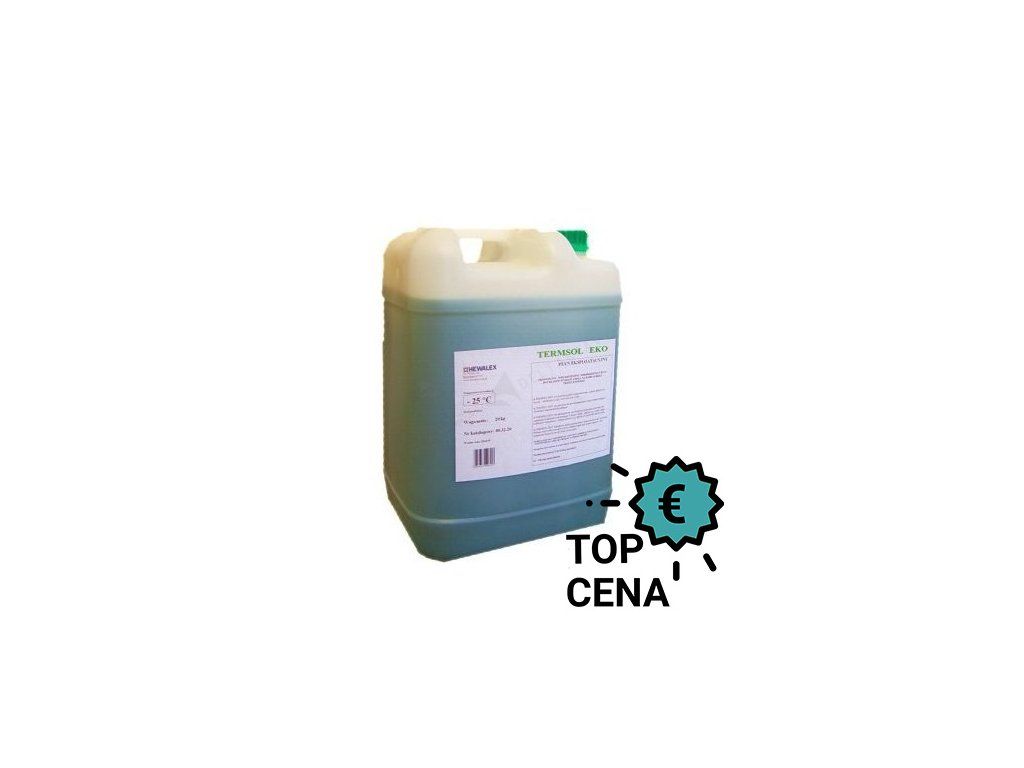
TERMSOL EKO antifreeze protects the wet circuit of the heating system against freezing
TERMSOL EKO antifreeze is commonly used in solar and heating circuits where the temperature may fall below freezing, and is also a suitable choice for the wet side of dual fuel towel radiators in intermittently heated properties. With purely electric radiators you do not need to think about antifreeze, as the manufacturer supplies the radiator with its own sealed fill that is designed to be frost-resistant from the factory (in most good-quality models it is a mixture that withstands temperatures well below freezing).
Safety when running electric radiators in the bathroom
As this is an electrical appliance operated in a very humid environment, safety is a subject that should not be underestimated. Good-quality heating elements such as DEVIrail undergo rigorous testing and comply with European standards for electrical appliances in wet areas. When choosing and installing one, you should stick to a few basic principles:
- The socket or electrical outlet must be protected by a residual current device with a rated tripping current of no more than 30 mA.
- The heating element must be rated at least IPX4; close to a shower enclosure we recommend a higher rating.
- Wiring and sockets in the bathroom must be installed, or at least checked, by a qualified electrician with regard to the protection zones defined in the standard.
- Never use extension leads or multi-way adaptors to connect the radiator – it should be connected directly to the fixed wiring or to a dedicated socket.
- Check the condition of the supply cable and connector regularly, especially if they are exposed to moisture and steam.
Maintenance and service life
One of the great advantages of electric towel radiators is minimal maintenance. Because the fluid inside the radiator is sealed and has no contact with an external heating circuit, there is no risk of airlocks or deposits from the boiler circuit, and no need for the regular bleeding familiar from conventional radiators. The service life of the heating element itself, in good-quality branded products, is generally 10 to 15 years in normal use, and many manufacturers provide a 2 to 5 year warranty on the element.
We recommend checking the joint between the heating element and the radiator body for leaks from time to time, especially if you notice traces of moisture or condensation around the bottom of the radiator. White and chrome surfaces need only routine cleaning with a cloth and a mild, non-abrasive detergent to preserve the shine and avoid scratching the finish.
The environmental and energy context in 2026
In the context of the current debate on the energy efficiency of buildings and the gradual tightening of requirements for renewable energy sources, electric towel radiators appear to be a supplementary yet sensible solution precisely because they allow accurately targeted heating – heat where and when it is really needed, without the unnecessary losses of running the whole heating system for one room. What is more, in households with a photovoltaic system an electric towel radiator can be run during sunny hours at virtually no extra cost, as it uses self-generated electricity instead of power from the grid.
Combining photovoltaics with electrical appliances that have a low but regular power demand (500 – 600 W) is currently one of the most frequently recommended ways of maximising the use of self-generated energy in the home, and a towel radiator in the bathroom is an ideal candidate – it can run during the day, when the photovoltaic system is producing the most energy, and keep the bathroom dry and warm without you paying the distributor for it.
Practical examples from real life
To make the subject as concrete as possible, here are a few typical scenarios that we regularly come across when advising customers on choosing towel radiators.
Example 1: Refurbishing a flat in a prefabricated apartment block
The owner of a flat in a prefabricated apartment block decided on a complete bathroom refurbishment. As the central heating risers did not run through the bathroom and rerouting them would have meant work in the communal parts of the building, she chose a purely electric towel radiator with an output of 500 W and wifi control. The result is a bathroom heated independently of the rest of the flat, which can be programmed to switch on just before the morning shower and in the evening before the children's bath time.
Example 2: Family house with a heat pump
A family in a new build with a heat pump and underfloor heating had a dual fuel radiator installed in the bathroom. In winter it runs on the heat pump circuit, which is economical given the low cost of the heat produced; in summer the family switches to the electric element, which keeps the bathroom dry and dries the towels without having to run the heat pump for just one room.
Example 3: Mountain cottage with intermittent use
The owner of a cottage used only at weekends installed an electric towel radiator with remote control via a mobile app. He switches the radiator on remotely while still on the way to the cottage, so the bathroom is already warm on arrival, and simply switches it off when he leaves, with none of the risk that a wet system carries of pipes freezing in an unoccupied property on frosty days.
How to choose the right model – a summary of the criteria
When making the final choice of a specific electric towel radiator, we recommend following these steps:
- Measure the area of free wall in the bathroom and choose a suitable height and width accordingly.
- Estimate the output you need from the room's floor area (roughly 100 W per m² for a well-insulated bathroom, more where the thermal insulation is poorer).
- Decide between a purely electric and a dual fuel solution depending on whether central heating pipework is available in the bathroom.
- Choose the finish (white or chrome) to suit the overall style of the bathroom.
- Check the IP rating and the location in relation to the protection zones defined in the standard.
- Consider whether you need advanced control (wifi, timer programmes) or whether a simple mechanical thermostat will do.
Frequently asked questions (FAQ)
Can an electric towel radiator be fitted in a flat without major building work?
Yes, that is one of the main advantages of this solution. All you need is an electrical outlet or socket close to the radiator, and to fix the radiator to the wall with the brackets supplied. There is no need to take up the floor or run new pipework, which significantly reduces installation time and cost compared with a wet connection.
How much electricity does a typical electric towel radiator use in a month?
For a typical household with a radiator output of around 500 W and an average of 3 hours' use a day, the monthly cost comes to roughly 8 to 9 euros at current electricity prices. The exact amount depends on the radiator's output, how long it runs and the tariff you have agreed with your electricity supplier.
Can one bathroom radiator be connected to both the heating and the electricity at the same time?
Yes, that is exactly what dual fuel radiators are for: they are connected to the wet central heating and also fitted with an electric heating element. In practice this means you can heat more cheaply via the central system in winter and switch to electricity out of season just to dry towels.
Is it safe to have an electrical appliance in the bathroom close to the shower?
Yes, provided the appliance is correctly installed by a qualified electrician, connected via a residual current device and has the IP rating required for the protection zone in which it is located. Heating elements intended for bathrooms are designed specifically for this type of environment and tested to the relevant European standards.
How long does the heating element in an electric radiator last?
In good-quality branded products the service life is generally between 10 and 15 years of normal use, and if the element does fail it can easily be replaced without having to change the whole radiator.
Is an electric radiator worthwhile in a house that already has central heating?
Yes, especially if you want the bathroom to be warm and dry outside the heating season too, when the boiler is switched off. In that case a dual fuel radiator is most often recommended in practice, as it combines the advantages of both systems – cheap running via the central source in winter and independence from the boiler in summer.
Conclusion
Electric towel radiators are a practical, modern and, in many situations, clearly the most advantageous way of heating a bathroom. Their greatest asset is independence from the central heating system, which you will appreciate above all in summer, in cottages, in flats that cannot be connected to the central heating, or simply whenever you want complete and precise control over the warmth in your bathroom. When choosing a specific model, we recommend paying particular attention to the output in relation to the size of the room, the IP rating and the type of control that matches the way you use the space. If you are considering a dual fuel solution connected to an existing wet circuit, do not forget a good-quality control valve and, for intermittently heated properties, suitable antifreeze. A correctly chosen and installed electric towel radiator will then serve you for years as a reliable, economical and safe source of heat exactly where you need it most.
Do you have a question about this topic?
Can't decide, or dealing with a specific situation in your home? Write to us – we will be happy to advise.