
Introduction: why water filtration is the key to the health and running costs of your pool
A pool is not just a tank of water for cooling off in the summer heat. It is a complex biotope that needs constant care, precisely set parameters and above all – something that is often underestimated – flawless water filtration. In 2026, with energy and chemical prices at record levels and legislation on public and private water sources becoming stricter, you can no longer rely on "tried and tested methods" without a thorough analysis of the quality of your source water.
Many pool owners think that if they have a standard sand filter installed and make regular trips to the shop for chlorine, the problem is solved. The reality is different. If your source water has a high content of iron, manganese, hardness or organic matter, an ordinary sand filter will act as little more than a passive object that does not do its job. The filter media often clogs quickly, the pump uses more electricity because of the higher resistance in the system and, worst of all, the pool water will not be hygienically clean even if you add disinfectant by the bucketful.
The aim of this article is to give you a comprehensive manual that takes you through the whole process of choosing the right filtration system. We will not be dealing in marketing phrases, but in the technical parameters that determine how long your investment will last. We will look at the difference between mechanical filtration, chemical treatment and advanced systems such as electrolytic disinfection, UV radiation and special heavy-metal filters. You will find out why a shower filter with KDF technology can matter not only for your body but also for the performance of the whole pool circuit, and how to avoid common mistakes when sizing pumps and filters.
Given the current market situation, with growing demand for greener solutions (such as a hydrogen water generator), we will also look at the energy side of operation. A correctly chosen filtration system can cut energy consumption by up to 30 % and significantly reduce the need for expensive chemicals. This article is for those who want to understand what is going on in the water they use and who are looking for a long-term, sustainable and safe solution rather than a temporary fix.
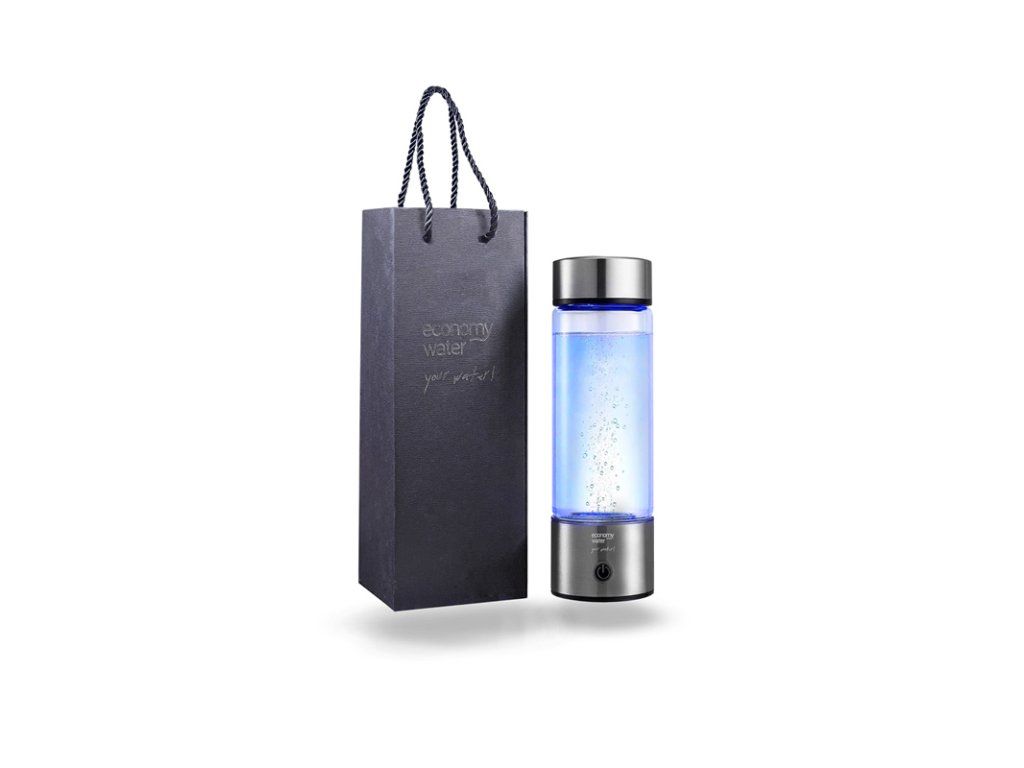
The HYDRO hydrogen water generator represents a revolution in environmentally friendly pool water treatment, replacing conventional chlorination.
Basic principles of filtration: what actually happens in the water?
Before we move on to specific types of filter, we need to understand the physical and chemical processes taking place in your pool. Filtration is not just about "holding back dirt particles". It is a combination of three basic stages: mechanical separation, biological breakdown and disinfection.
1. Mechanical separation: This is the first and most important stage. Water circulates through the filter media (sand, glass media, anthracite, diatomaceous earth). The smaller the pores in the media, the finer the particles it traps. However, if iron or manganese is present in the water, these substances oxidise and form deposits that can block the pores of the sand far more quickly than ordinary dirt. That is why it is critical to know what is dissolved in your water before you let it into the pool.
2. Chemical stability: The water must have the correct pH value and hardness. If the water is too soft, it corrodes the metal parts of pumps and pipes. If it is too hard, limescale builds up on the pool walls and in the filter itself, reducing its efficiency. This is where water treatment using softening heads or special additives comes in.
3. Disinfection: However well the water is filtered, if it does not contain a sufficient concentration of disinfectant, bacteria, algae and fungi will develop. Conventional chlorine is effective but has drawbacks – it forms chloramines (the ones that sting your nose) and irritates the skin and eyes. Modern alternatives such as ozone, UV radiation or hydrogen water offer a more effective and healthier route.
Key note for 2026
We now know that "one big filter" is not enough. The most effective systems are hybrid. They combine mechanical filtration with water pre-treatment (softening, iron removal) and subsequent disinfection. Ignoring any one of these components leads to failure of the whole system.
Why is an ordinary sand filter not enough?
Sand filters are ideal for removing visible debris – leaves, insects, sand. However, their effectiveness is limited to particles larger than 20 to 40 microns. Bacteria are roughly 1 to 5 microns in size, and viruses are smaller still. A sand filter lets them through. What is more, if iron is present in the water, the sand quickly turns rust-coloured and loses its permeability. In that case you need to install specialised iron and manganese filters that use oxidising media such as BIRM or Pyrolox.
The diagram shows that an ordinary sand filter retains large debris but lets bacteria and micro-organisms through, which calls for additional disinfection.
How to analyse your source water: the first step towards the right filtration
The biggest mistake people make when installing a pool system is buying a filter according to the pool volume without knowing the quality of their source water. If you have a 50 m³ pool and fill it with well water with a high iron content, you will have problems even with the most expensive filter. Conversely, if you have mains water (which is usually treated), a simpler set-up will do.
What do you need to test?
We recommend carrying out a full water analysis at least once a year, ideally in spring before the season. Focus on these parameters:
- pH value: The ideal range is 7.2 to 7.6. A value above 7.8 causes limescale to build up and reduces the effectiveness of chlorine. Below 7.2 it causes corrosion and skin irritation.
- Iron (Fe): Above 0.3 mg/l the water starts to turn cloudy and can leave red stains on tiles and clothing. It requires special filtration.
- Manganese (Mn): Like iron, it causes black stains and an unpleasant smell. It often occurs alongside iron.
- Water hardness: Total hardness should be in the range of 150 to 250 mg/l CaCO3. Water that is too soft is aggressive; water that is too hard forms deposits.
- Organic matter: Oxidisability (COD) indicates the amount of organic waste. If it is high, you need stronger oxidation (ozone, UV).
If you own a house and use well water, it is almost certain that you will have to deal with iron and manganese. In that case it is essential to install an iron and manganese water filter that works on the principle of catalytic oxidation. These filters use special media that speed up the oxidation of dissolved metals into solid forms, which are then trapped in the filter.
A real-life example: the Novák family
The Novák family had a 40 m³ pool. They installed a standard sand filter and bought chlorine. After two months their water turned brown, the filter blocked and they had to replace it. When they took it apart, they found that the sand was completely saturated with iron oxides. The problem was their well, which had an iron content of 1.2 mg/l. The solution was not to buy a better sand filter, but to install an iron and manganese pre-filter.
After they installed the HydroTreat BIRM 0.8 m³/h iron and manganese water filter, the situation stabilised. The BIRM filter is designed to remove iron and manganese effectively without the need to add chemicals (such as potassium permanganate), keeping the water clean and clear. The family saved thousands of euros on repairing the damaged sand filter and on chemicals.

The HydroTreat BIRM filter is the ideal solution for water with elevated iron and manganese content, ensuring long-term cleanliness and protecting your equipment.
Types of filtration system: comparison and selection according to your needs
There are several types of filtration system on the market. Each has its advantages and disadvantages and suits specific conditions. Let us look at the most important ones.
1. Sand filters
The most widespread type. They use special pool sand as the filter media. The advantages are low cost and simple maintenance (backwashing). The disadvantages are lower efficiency with very fine particles and an inability to remove dissolved substances (iron, manganese, organics). They are suitable for pools connected to the mains with good-quality source water.
2. Glass media filters
These filters use recycled glass media instead of sand. They are better than sand filters because they have more surface area for trapping dirt and are more resistant to chemicals. They allow better backwashing and last longer. They are ideal for commercial pools or domestic pools where a heavier load is expected.
3. Diatomaceous earth filters (DE filters)
They use diatomaceous earth, which can trap particles down to 1-2 microns. They are considered the most effective mechanical filters. The resulting water is crystal clear. The disadvantages are the need to replace the media more often and a higher initial cost. They also call for more careful handling of the waste, because diatomaceous earth is a dusty material.
4. Combined (hybrid) filtration systems
This is the future: systems that combine mechanical filtration with chemical water treatment in a single flow. For example, a filter that removes iron and disinfects the water at the same time. This is exactly where the advanced systems described in the following sections fit in.
5. Filtration based on KDF and special media
KDF (Kinetic Degradation Fluxion) technology uses a blend of copper and zinc for oxidation-reduction reactions. It effectively removes iron, hydrogen sulphide and chloramines, and inhibits bacterial growth. Although it is often used in shower filters, the KDF principle can also be applied in wider systems for treating source water. If you have a problem with odours or skin allergies, consider integrating KDF media into your system.
For the ordinary user who wants to protect their skin and also improve the quality of the pool water, it is worth knowing that even a shower filter with KDF 1/2" can play a part in the overall ecosystem. Although it is primarily used to treat the water you shower in after getting out of the pool, the principle of removing chlorine and heavy metals from water is the same. Some pool owners also fit similar modules to their supply pipes to reduce the chlorine concentration throughout the house.
Water disinfection: from chlorine to hydrogen water and UV radiation
Filtration alone does not kill bacteria. That is the job of disinfection. Chlorine has traditionally been used, but its negative effects on health and the environment are now widely recognised. The market is therefore moving towards alternative solutions.
UV disinfection (ultraviolet radiation)
UV light acts on the genetic material of bacteria and viruses, neutralising them. It is a physical process that leaves no chemical residues and does not affect the taste or smell of the water. UV lamps are housed in a separate chamber through which the water flows. However, they must work in conjunction with a small amount of chlorine or another disinfectant, because UV light has no residual effect (it does not act in the pool, only at the moment the water passes the lamp).
Installing the Viqua S463RL UV lamp in your system is one of the best steps you can take to improve hygiene and safety. This lamp is designed to be highly effective against bacteria, viruses and algae. It lets you reduce the chlorine dose significantly, putting an end to problems with eye and skin irritation.

The Viqua S463RL UV lamp provides highly effective disinfection without the use of chemicals, which is ideal for sensitive skin and children.
Electrolytic disinfection and the hydrogen water generator
One of the most modern trends is producing hydrogen water (alkaline water rich in hydrogen molecules) directly in the pool. Hydrogen water generators use electrolysis to produce active forms of oxygen and hydrogen, which have strong antioxidant and antibacterial effects.
The HYDRO hydrogen water generator is a device that can transform ordinary pool water into hydrogen-rich water. This water has unique properties: not only does it destroy bacteria and algae effectively, it also helps neutralise toxic substances and improves overall water quality. The advantage is that it creates no by-products harmful to health and is environmentally friendly.
This type of disinfection is ideal for families with children, for allergy sufferers and for anyone who wants to minimise the chemical burden on the environment. Hydrogen water also helps keep the pH in the optimum range and prevents deposits from forming.
Ozone disinfection
Ozone is a stronger disinfectant than chlorine. It destroys bacteria, viruses and mould instantly. Ozone systems are often combined with UV radiation or chlorine for maximum effectiveness. However, ozone is unstable and must be generated on site. It requires professional installation and monitoring.
Water treatment: softening and removing heavy metals
Besides disinfection and mechanical cleaning, treating the chemical composition of the water is also key. If you have hard water, you will have a problem with limescale. If you have water with a high iron content, you will have a problem with discolouration and clogged filters.
Water softening
Water softeners work on the principle of ion exchange. Water flows through a resin bed containing sodium ions. The calcium and magnesium ions (which cause hardness) are replaced with sodium ions. The result is soft water that is gentle on the skin and does not leave deposits on surfaces.
For pools, softening matters mainly for preventing limescale build-up on heating elements and in the filter itself. The automatically controlled softening head 1" - HYS-1 is a device that can automate this process. It has electronic control that manages regeneration on the basis of the measured water flow or time.

The HYS-1 automatic softening head provides precise control over water hardness, which extends the service life of your pool equipment.
This device is ideal for households where the source water is too hard. With this head you can set the required degree of softening and prevent scale from forming throughout the pool circuit. Automation means you do not have to run the regeneration process by hand, which is a huge advantage over manual systems.
Specialised iron and manganese filters
We have already mentioned iron-removal filter systems, but it is important to stress the difference between the various types of media. There are two main categories:
- BIRM: A silicate media coated with iron oxides. It works on the principle of catalytic oxidation. It is cheaper and suitable for ordinary domestic use. It requires regular backwashing.
- Pyrolox: An oxidising mineral (potassium manganate). It is more effective at higher concentrations of iron and manganese. It lasts longer and is more resistant to bacterial fouling.
If you have water with a high iron content, we recommend using the HydroTreat Pyrolox 0.8 m³/h iron and manganese filter. This filter is designed for heavier loads and provides long-term stability. It is ideal for wells that have a problem with iron and manganese oxidation.
Energy efficiency and running costs in 2026
In 2026 energy prices are still high and every pool owner is trying to minimise running costs. The right choice of filtration system has a direct impact on electricity consumption.
Pump consumption
The pump is the biggest energy consumer in a pool system. If the filter is clogged or incorrectly sized, the pump has to work at a higher pressure, which increases consumption. Using premium filter media (glass media, diatomaceous earth) allows a lower flow rate for the same efficiency, which means you can use a smaller, more economical pump.
Another factor is the frequency inverter. Modern variable-speed pumps let you match the flow rate to current needs. When the pool is clean, a lower output is enough. When intensive filtration is needed, you increase the output. This can save up to 50 % of energy compared with traditional single-speed pumps.
Cost of chemicals
An investment in a quality filtration system also pays for itself in savings on chemicals. If you have good mechanical filtration and disinfection (UV, hydrogen water), you will need less chlorine. Chlorine is expensive, and storing and handling it requires care. The HYDRO hydrogen water generator, although it has a higher initial price, significantly reduces the need to buy chemical disinfectants.
Environmental impact
Besides the economics, the environmental aspect is important too. Fewer chemicals mean less pollution of waste water. Eco-friendly filters and disinfection systems help protect the environment and are in line with growing customer demand for sustainable solutions.
A practical guide: how to design and install a filtration system
Now that you know the theory, let us move on to the practical part. How do you design a system that will work without problems?
Step 1: Analysing the source water
Do not start by buying equipment. Have a water analysis done first. If that is not possible, use good-quality test kits, but contact a laboratory to be on the safe side. Find out the iron and manganese content, hardness and pH.
Step 2: Sizing the flow rate
Calculate the required flow rate. The usual rule is that the pool water should be turned over 2 to 4 times per hour. For a 50 m³ pool, that means a flow rate of 100 to 200 m³/h. However, if you have a specialised iron filter, the flow rate may be lower, because these filters are designed for lower velocities.
Step 3: Choosing the type of filter
Choose the type of filter on the basis of the water analysis:
- Clean mains water -> Sand or glass filter + UV/chlorine.
- Water containing iron -> Iron filter (BIRM/Pyrolox) + sand filter + UV.
- Water that is too hard -> Softening head + filter + UV.
- Allergies/purity -> Hydrogen water generator or ozone.
Step 4: Installation and set-up
Carry out the installation in accordance with the manufacturer's instructions. It is important to connect all hoses and valves correctly. Set the timers and controllers. For automatic heads (softeners), set the correct regeneration mode.
Step 5: Maintenance
Regular maintenance is key. Check the pressure on the gauge. If the pressure rises by 0.5 to 0.8 bar, carry out a backwash. Check the condition of the UV lamp (replace every 8000 hours). Top up the media as required.
The filtration system design process: from water analysis to final installation and set-up.
Frequently asked questions (FAQ)
1. How often does the sand in the filter need to be changed?
Ordinary pool sand should be changed every 3 to 5 years, depending on how intensively the pool is used and on the water quality. If the filter blocks frequently or the water stays cloudy, it may mean that the sand is clogged or that you need to change the type of media (e.g. to glass media).
2. Can I use a hydrogen water generator in a solar-heated pool?
Yes, the HYDRO hydrogen water generator is compatible with solar-heated pools. In fact it is an ideal solution, because solar-heated pools often have a higher temperature, which encourages bacterial growth. Hydrogen water provides disinfection without the need for additional chlorine, which is a great advantage for solar systems.
3. Why does my pool water turn green even after I have used chlorine?
A green colour usually indicates the presence of algae. If it happens even after chlorine has been used, it may mean that the chlorine is binding to organic matter (forming chloramines) and cannot disinfect effectively. UV radiation or ozone will help, breaking down the organic matter and allowing the chlorine to work more efficiently. Also check that you have sufficient flow in the system.
4. Do I need to use a water softener for a pool?
A softener is not always necessary, but it is strongly recommended if you have hard water. Hard water causes limescale to build up on the pool walls and in the equipment, reducing its efficiency and service life. The HYS-1 automatic softening head will help you keep the water in optimum condition and prevent scale from forming.
5. How often does the UV lamp need to be replaced?
UV lamps should be replaced every 8000 operating hours, which is roughly 1 year. Even if the lamp is still lit, its effectiveness declines over time. To be on the safe side, replace it at least once a year, ideally at the start of the season.
6. Can I use an iron filter for a pool filled with mains water too?
Yes, if iron is present in the mains water (which can happen with old pipes or in certain regions), an iron and manganese filter (e.g. HydroTreat) is essential. Without it, the iron would settle in the pool and cause stains and filter clogging.
Conclusion: an investment in health and peace of mind
Pool water filtration is a complex process that requires attention and expertise. It is not just about buying the most expensive equipment, but about choosing a system tailored to your specific conditions. From proper analysis of the source water, through the choice of filter type, to the implementation of modern disinfection technologies, every step affects the quality of the water and how satisfied you are with your pool.
In 2026, with energy and chemical prices high, it is important to invest in systems that are energy-efficient and environmentally friendly. Hydrogen water generators, UV radiation and specialised iron and manganese filters are key elements that will help you achieve this balance. Do not forget the role of softening heads and shower filters with KDF technology either, which contribute to overall water quality and your family's health.
Do not be afraid to seek professional help. A correctly designed filtration system will save you time, money and stress. Your water will be clean, clear and safe for the whole family. An investment in quality filtration is an investment in health and long-term satisfaction with your pool.
For more information about our products and installation options, please do not hesitate to contact us. Together we will find the best solution for your pool.
Do you have a question about this topic?
Can't decide, or dealing with a specific situation in your home? Write to us – we will be happy to advise.