
How Much a Condensing Boiler Saves Compared to an Old Boiler
Upgrading to a condensing boiler can significantly reduce your heating costs, with efficiency improvements translating into real savings over time. However, the exact amount you save depends on various factors, and it's important to understand the underlying technology to make an informed decision.
How Condensing Boilers Work to Improve Efficiency
When natural gas is burned, it produces both heat and water vapour. In traditional boilers, this vapour escapes through the flue, taking with it a valuable source of energy known as condensation heat. This heat is released when the vapour condenses back into liquid form, much like how a cold window fogs up when you cook in the kitchen.
Conventional boilers, whether atmospheric or turbo models, typically operate with an efficiency of 88–92% relative to the calorific value of gas. This means they waste a portion of the available energy by allowing the water vapour and its latent heat to escape.
Condensing boilers, on the other hand, are designed to capture this wasted energy. They cool the flue gases to the point where the water vapour condenses inside the heat exchanger. This process releases additional heat, which is then used to warm the heating water. As a result, these boilers can achieve an efficiency of 105–109% relative to the calorific value. The higher efficiency means less gas is required to produce the same amount of heat, leading to lower energy bills.
The key to understanding the savings lies in the efficiency gap between traditional and condensing boilers, which is roughly 15 to 20 percentage points. This improvement is the foundation for the potential savings, but other factors also influence the actual amount you'll see on your gas bill. We’ll explore these in the following section.
Approximate range of operating efficiency relative to the calorific value of gas. Specific values depend on the model, settings and heating system – these are not guaranteed figures for every house.
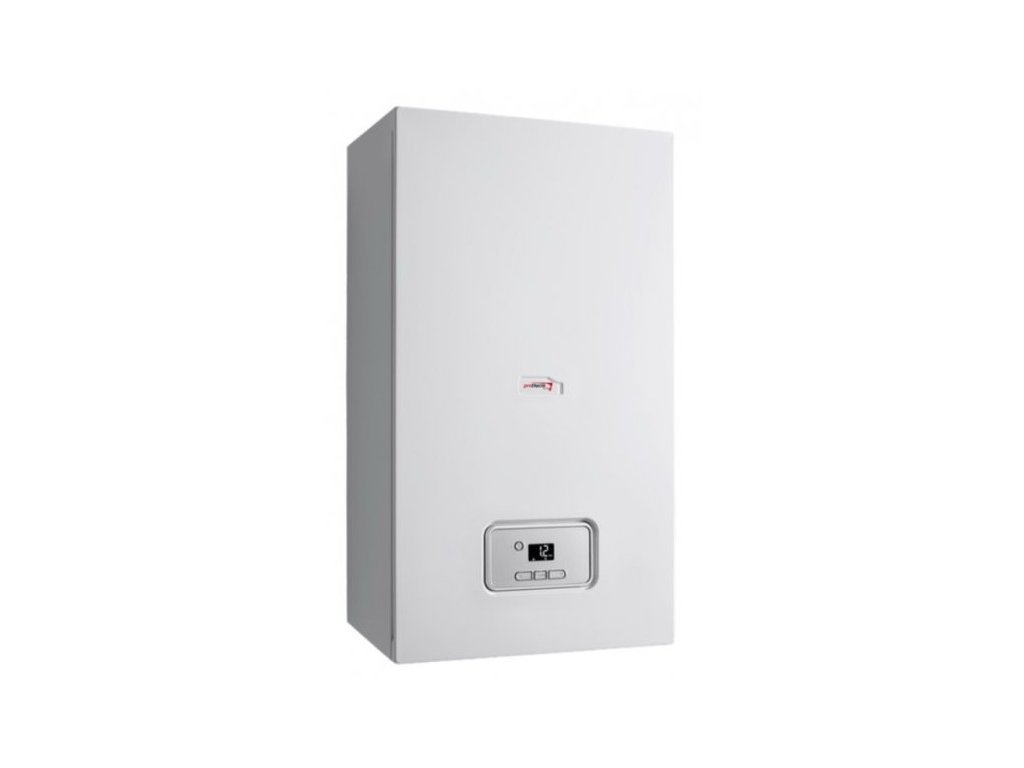
Here's an example of a modern condensing boiler that achieves efficiency at the higher end of this range:
|
Protherm Gepard Condens 18/25 MKV – a compact condensing boiler suitable as a typical replacement for an older atmospheric boiler in a flat or a family home. Price from €1,322.00. |
Key Factors That Affect Real-World Savings
While the efficiency gap between an old and a new boiler gives a theoretical idea of potential savings, the actual results depend on several specific factors. Here’s a list of the most important ones:
- The age and condition of the original boiler
- The type of heat emitters used
- The presence of weather-compensated control
- The house's insulation and heat loss
- Usage habits and boiler settings
How Old and Worn Is Your Current Boiler?
The biggest influence comes from the boiler you're replacing. If it's 20 years old or more, or if it's clogged, poorly maintained, or never properly tuned, its actual efficiency might fall below 88–92%. Over time, deposits in the heat exchanger and outdated combustion control reduce its performance. In such cases, the upgrade to a new condensing boiler offers a more substantial improvement and higher potential savings. On the other hand, replacing a relatively new, well-maintained turbo boiler will result in a smaller efficiency jump and thus lower savings.
Do You Have Radiators or Underfloor Heating?
Condensing boilers work best when return water is as cool as possible—ideally below 55°C. This makes the type of heat emitter a key factor:
- Underfloor heating typically uses water temperatures between 30–40°C, which allows the boiler to condense most of the time. This leads to greater savings over the heating season. More on this in Underfloor Heating and a Condensing Boiler.
- Radiators, particularly older or incorrectly sized ones, often require heating water at 60°C or higher. This reduces the boiler’s ability to condense, meaning the savings, while still present, are less pronounced. For more information, see Radiators and a Condensing Boiler.
Does the System Use Weather-Compensated Control?
To maximize the benefits of a condensing boiler, it needs to operate at the lowest possible temperature that still heats your home effectively. Weather-compensated control automatically adjusts the heating water temperature based on the outside conditions, ensuring the boiler doesn’t overheat when it’s not needed. Without this feature, a significant portion of the condensing boiler’s efficiency remains untapped. That’s why installing weather-compensated control alongside a new boiler is a common way to boost overall savings.
How Well Is Your House Insulated?
A home with high heat loss—such as one with old windows, no insulation in the walls or roof—uses more gas overall. This means that even a small improvement in boiler efficiency can lead to higher savings in absolute terms. Conversely, a well-insulated home has lower overall gas use, so the same efficiency gain may result in smaller savings in euros, even though the percentage remains the same.
Are You Using the Boiler Properly?
Even a high-efficiency boiler can fall short of its potential if it's misused or neglected. Examples include setting the heating water temperature too high, using an incorrect weather compensation curve, or skipping regular maintenance. Correct setup after installation and ongoing care are essential for turning theoretical savings into real results. For more on this, see Gas Consumption and Heating Savings.
Estimating Potential Savings After Boiler Replacement
Challenge in Predicting Exact Savings
It's difficult to determine an exact percentage of savings without knowing the specifics of your property. However, you can still get a general idea of the potential benefits by using a simple illustrative example.
Assumptions for the Example
Let's imagine a typical household that spends around €800 annually on gas for heating and hot water using an outdated boiler. This is not meant to represent an average or recommended value but serves as a reference point for the example. If this household is considered to be in the intermediate category—with an older but not overly neglected boiler, standard radiators, and no weather compensation system—then it’s reasonable to estimate that annual gas costs could be reduced by approximately 15–30%. This would equate to potential savings of about €120–240 per year in this example.
How to Improve the Accuracy of Your Estimate
Keep in mind that this is a rough calculation based on hypothetical data and not a precise forecast for your home. Your actual savings may be either less or more, depending on factors such as the age of your current boiler, your heating system, and the type of controls you have. The most accurate way to determine your savings is by comparing your energy usage before and after the upgrade, or by having a professional conduct an energy assessment that takes into account all the unique features of your property.
Key Questions About Calculating Return on Investment for a New Boiler
How is the payback period for a new boiler calculated?
The formula for estimating the payback period is: (boiler price + installation costs) ÷ annual savings in euros. This gives an approximate number of years it will take for your savings to cover the initial investment.
What factors influence how long it takes to recoup costs?
The payback period varies depending on the total cost of the boiler and installation, the actual annual savings you achieve, and installation specifics like the need for condensate drainage or a new chimney liner. The result can range from a few years to the low tens of years.
Why is it important to consider the remaining lifespan of your old boiler?
An older boiler may have limited longevity, and if it fails unexpectedly, you might be forced to replace it quickly without being able to compare prices or options. This can lead to higher overall costs.
What other benefits come with a new boiler besides payback time?
A new boiler typically has a lower risk of breakdowns and lower maintenance costs. Additionally, spare parts become harder to source or more expensive once a boiler reaches a certain age, making repairs less predictable.
Is payback the only factor when deciding to replace a boiler?
No, it's just one perspective. A more detailed evaluation of when a replacement makes sense is available in the article Is It Worth Replacing an Old Gas Boiler with a Condensing One?
Maximising Condensing Boilers Through System Optimisation
During a home renovation, a family installed a new condensing boiler and also added underfloor heating in the living areas. This decision allowed the system to operate at lower temperatures, increasing the boiler's condensing efficiency and reducing gas consumption. This real-life example shows how supporting technologies can significantly enhance the performance of a new boiler.
Condensing boilers work best when the system is designed to keep operating temperatures low. Several key adjustments can help you reach this goal:
- Weather-compensated control automatically adjusts the heating water temperature based on outdoor conditions, ensuring the boiler spends more time in condensing mode.
- Thermostatic radiator valves give you precise control over room temperatures, avoiding overheating and unnecessary energy use.
- Hydraulic balancing ensures even heat distribution, so the boiler doesn't need to raise temperatures to compensate for imbalances.
- Underfloor heating is particularly effective with condensing boilers, as it supports operation at lower temperatures where condensing efficiency is highest.
Even small additions can make a difference. One such example is shown below:

|
Vaillant VRT 50 – a weather-compensated room thermostat that helps the boiler operate at the lowest necessary heating water temperature, thereby making use of the condensing effect over more of the heating season. Price from €71.64. |
For a deeper understanding of how weather-compensated controls operate and their impact on boiler efficiency, you can read more in the article on Thermostat and Weather-Compensated Boiler Control.
Choosing the Right Boiler: Key Factors for Real Savings
When evaluating whether a condensing boiler will save you money, several key factors influence the outcome. These determine how much of the theoretical efficiency you can actually achieve in practice. Consider the following criteria before making a decision:
- Age and condition of your current boiler – Older models are less efficient and may not justify a high-efficiency replacement.
- Type of heat emitters – Radiators and underfloor heating systems can affect how effectively heat is distributed and retained.
- Presence of weather-compensated control – This system adjusts boiler output based on outdoor temperature, increasing efficiency.
- Insulation quality of your home – Better insulation reduces heat loss and maximizes the benefits of a condensing boiler.
- System setup and usage patterns – Even the best boiler won’t deliver savings if it's misconfigured or overused.
While condensing boilers typically offer a 15–30% reduction in annual gas heating costs, this range is only a general estimate. Real savings can vary widely depending on your specific situation. The most reliable method to assess potential savings is by comparing your current and future gas consumption data or by consulting a heating professional familiar with your home's characteristics.
To help make an informed decision, you can also use a simple calculation method to estimate the payback period of your investment. This takes into account the initial cost of the boiler and the expected annual savings in energy bills.
Understanding Condensing Boiler Efficiency and Replacement Decisions
Condensing boilers can offer significant savings, but the exact amount varies depending on your home's characteristics. While they work best with underfloor heating, they are still more efficient than older atmospheric boilers when used with radiators. Replacing an old or inefficient boiler can lead to faster payback, especially if the existing system is outdated or at risk of breakdown.
Energy Savings and Real-World Performance
The commonly cited 20% energy saving is an estimate and not guaranteed for every home. Actual savings depend on factors such as the age of the original boiler, the type of heat emitters, the control system, and the level of insulation in the property. In some cases, savings may be higher or lower than this average.
Compatibility with Radiators and Existing Systems
Yes, condensing boilers can be used with radiators. Although they achieve the highest efficiency with low-temperature underfloor heating, they still offer improved efficiency compared to older atmospheric boilers. In most homes, you can install a condensing boiler without replacing the existing pipework or radiators. However, optimizing the system through measures like hydraulic balancing or weather-compensated controls can further enhance performance and savings.
Payback Period and Cost Considerations
The time it takes for a new condensing boiler to pay for itself depends on the installation cost and the amount of energy you save each year. Older, less efficient boilers typically result in a quicker payback period because the efficiency gap is greater. For a precise calculation, refer to the payback section in the article.
Replacement Decisions and Efficiency Gains
Replacing a boiler that is still working can make sense, especially if the original unit is very old or poorly maintained. A new condensing boiler can significantly reduce energy use and avoid potential breakdowns. However, if your current boiler is relatively new and in good condition, it may be more cost-effective to wait. A detailed assessment of when a replacement is beneficial can be found in a separate article.
Importance of Correct Sizing
The size of the boiler, or its output, plays a key role in overall efficiency. A boiler that is too large or too small for your home's heating needs will not operate as efficiently as it could. Therefore, ensuring the correct output relative to the house's heat loss is essential for maximizing the benefits of condensing technology.
Key Considerations When Upgrading or Managing Your Heating System
- Evaluating the benefits of replacing an old gas boiler with a condensing model
- Understanding how thermostat and weather compensation can improve efficiency
- Combining underfloor heating with a condensing boiler for better performance
- Tracking gas consumption and identifying opportunities for heating savings
What Are the Advantages of a Condensing Boiler?
If you're considering upgrading your boiler, a condensing model may offer significant benefits. These units are more efficient than older non-condensing boilers, and they can lead to long-term savings in energy costs and reduced emissions. Whether it's worth the investment depends on factors like the age of your current system and your household’s heating needs.
How Can Thermostats and Weather Compensation Help?
Thermostats and weather-compensated boiler controls work together to regulate your heating system more precisely. This ensures that your boiler only uses the energy needed to maintain a comfortable temperature, adjusting automatically based on external weather conditions. This kind of smart control can significantly enhance the efficiency of your heating setup.
Can Underfloor Heating Work Well with a Condensing Boiler?
Yes, underfloor heating systems are particularly well-suited for use with condensing boilers. The lower water temperatures required for underfloor heating allow the boiler to operate in its most efficient range for longer periods. This combination can optimize both comfort and energy efficiency in your home.
Why Should You Monitor Gas Consumption?
Understanding your gas consumption is key to identifying ways to save energy and reduce costs. By tracking your usage, you can spot inefficiencies and make informed decisions about system upgrades or adjustments. This data is also useful when comparing the performance of different heating solutions over time.
Have a Question About Choosing a Boiler?
Can't decide, or dealing with a specific situation in your household? Write to us – we're happy to advise.